A Christian View of Music (Part 2)

Meaning and Music (continued)

Judging meaning in music means we pay attention to something other than our own reactions to it. Music does not become good or bad based on our reactions (some of which are automatic and visceral). 

Meaning is never separable from form. We cannot change forms without changing meanings. For instance, a sonnet cannot–mean the same thing as a limerick, even if both are examining the same object. The same is true of other forms and even of whole media.
This also helps us rightly use the word style in the music debate. Style makes it sound as if something fundamentally the same is being superficially altered on the outside. But this is not the case. We should speak about different forms. Rap and baroque and not just different styles, they have fundamentally different forms, different shapes. It would be like saying that a cathedral and a hut are different styles of housing. Each form of music must be evaluated for its meaning, not merely dismissed with a pseudo-tolerance that recognises how ‘ any style can give glory to God.’

Objection: Not everyone sees songs as sensual, destructive, etc. How do we account for such different tastes, or the apparent inability to detect that music is subversive to Christian affections?

First, this inability is anything but universal. For the most part, only two kinds of people deny that some such meanings are intrinsic, and that many more are conventional. They are postmodernists (who deny all meaning) and evangelicals (including some fundamentalists). You will not find this argument-against-meaning being made either in Rolling Stone or in the journals of art and culture.

Second, the inability of today’s generation to discern the meanings of particular musical forms and compositions is equivalent to the teenager whose vocabulary is not large enough to allow him to know when he’s been insulted. Is there not something to be said for learning how a language communicates before one pontificates about what it does not mean?

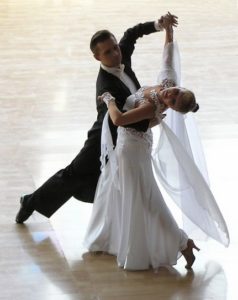
Third, people can become desensitized to meanings. A person who is living at a rock-and-roll level of eroticism is not likely to appreciate the more refined eroticism of the waltz. A person whose idea of the erotic is controlled by the visual will probably not appreciate the extent to which musical sound can communicate eroticism. Glenn Miller’s “Moonlight Serenade” is deeply erotic, but I doubt that anybody whose mind is filled with Snoop Dog will detect it.
Fourth, the real problem here is not about what people know, it is about what people love.  We are all of us willing to deceive ourselves to keep what we love.  Youths especially become so identified with their music that an attack upon their music is construed as an attack upon their persons.  If they don’t feel that they have given themselves to sensuality, or anarchy, or inebriation, then they are not likely to allow that the music in which they delight themselves is primarily about sex, or rebellion, or drugs.



  – David De Bruyn, Professor of Church History, Shepherds’ Seminary Africa

A Christian View of Music (Part 1)

Music is not man’s invention, it is man’s discovery. Music predated the creation of man (Job 38 ) As part of creation, music can be used to distort the Creator’s desires for His world, or rightly represent them.

There are over 290 references to music in the Bible. The Bible refers to musical instruments: Wind instruments like the flute and horn and trumpet; string instruments like the lyre and harp and psaltery, percussion instruments like the cymbals.  We read of the Songs of Moses, Songs of Deborah, Hannah, Songs of David, Songs of Asaph. We read of the great Levitical choirs organised by David. We read the Song of Solomon and find in I Kings 4 out he also composed 1005 songs. Isaiah is a wonderfully musical book – with a number of songs in it. The entire book of Psalms is a songbook – the songbook of ancient Israel and the early church, containing not only lyrics, but even the tunes they were to be sung to. In fact, fully one third of the Old Testament is Hebrew poetry – most of it to be sung.  In the New Testament we read the songs of Mary, of Simeon, of Zechariah, of the Angels. Paul in his writings sometimes quotes what was almost certainly an early hymn – many believe Philippians 2:5-11 was one such example, another being 1 Timothy 3:16. Paul commands the use of music in Ephesians and in Colossians.  The Bible finishes with Revelation, with numerous songs being sung in heaven itself.


Meaning and Music

  1. The Bible is clear that music communicates. The Bible is very clear on this. Certain musical forms can carry meaning and “fit” best with specific purposes. For instance Scripture speak of songs of the drunkard (Ps 69.12), songs of the harlot (Is 23.15), songs of praise (Nehemiah 12:46), songs of devotion (2 Kings 3.15), songs of celebration (1 Kings 1.18-40; 1 Chr 15.28), songs of war (Ex 32), and songs of pagan worship (Ex 32). A very graphic illustration of this occurs when Moses and Joshua are returning from Mount Sinai, and the people of Israel have fallen into idolatry down below (Exodus 32:17-18).
  2. Music communicates, not in propositions, but in affections, or emotions. Music is so able to represent an emotion that the Bible sometimes treats that emotion and the sound of the music as the same thing. “My harp also is turned to mourning, and my organ into the voice of them that weep”. (Job 30:31). Most everyone recognizes music is an emotional language. We all understood that films use mood music in the background to help us know if we are supposed to be happy, scared, in suspense, tense, excited, thrilled, titillated, saddened.

Objection: “The note C can’t inherently communicate good or evil – the sound is neutral!” Answer: Just as “notes, sounds, and rhythm” have no inherent ability to communicate “propositional truth,” likewise the letters of the alphabet or of scratching characters on a page have no inherent ability to communicate. So what? The point is that when put together, music becomes language that can communicate truth or lies.

“Propositional truth” is not the only truth with which we must concern ourselves. The truth of propositions lies in their correspondence to the reality that they describe. The truth of affections lies in their correspondence (their proportionality) to the objects to which they are attached. Right emotion is a question of truth.

All arts deal primarily in affective, rather than propositional, truth. The function of hymnody as an art is not primarily to communicate propositional truth, but rather to shape a correct, proportionate, or ordinate response to the object under consideration.  Otherwise we would simply use prose.  Music of all sorts (including hymnody) reaches the affections primarily, and the discursive understanding only secondarily.

What this implies is that all music has meaning, and therefore all music is moral. If music does not have propositions which we can study, how can we determine it meaning? Musical meaning is a complex subject, but not one that is impossible to understand. We should think about music like a combination between tone of voice and non-verbal gesturing. Some of the meaning is culturally-dependent, some of it is intrinsic, but the combination is never meaningless. Music has meaning in three ways:

  1. Its use. How music is used – for what occasion, and for what purpose, to carry what idea or message shapes the meaning we give it. A culture’s use of a certain music shapes meaning
  2. Its associations. Who uses it, what groups, what situation, in what circumstance, shapes the meaning.
  3. Its intrinsic form. Music has melody, harmony, rhythm and timbre, tempo, pitch and mode, and so forth.  These do differ from culture to culture, but not in ways that make them impossible to penetrate, because sound and the human ear are God’s creations, not culture’s.

But it does not really matter whether the meaning is associational, conventional or intrinsic. We are responsible for the correct use wherever the music is used that language is spoken.


  – David De Bruyn, Professor of Church History, Shepherds’ Seminary Africa

A Christian View of Entertainment and Media Choices (Part 3)

Television/ Internet Dominance (continued)

Setting Limits on TV Viewing:

  1. Limit the time you spend watching. The Bible tells us to use our time wisely. You can almost always find something better to do with your time than watching purely entertainment-oriented TV. 

Be a good example of self-control with media. Parents must set an example that is worthy to be followed. Wise choices must be made, and self-control must be employed. The sobering fact is that our children will emulate what they see in us. They learn as much by how we live as they do by what we tell them. If we are always watching television, even if it is relatively good television, what message does that send to our kids? If we skip church to watch the game, if we justify dirty movies by “fast-forwarding the bad parts,” if we laugh at the sensual or irreverent sitcom jokes, what lessons do we teach our children? No matter what we say, we will not convince them that Jesus Christ is our highest love if the way we spend our free time suggests otherwise. Stand guard against sinful influences.

Compare your media intake with your intake of God’s Word. Are you more devoted to your own entertainment and amusement than you are to God’s precious Word? What plan of action will you take to address this?

  1. Decide on standards of acceptability and unacceptability. Don’t watch anything if nothing worth watching is on.

Psm 19:14 – “May the words of my mouth and the meditation of my heart be pleasing in your sight, O LORD, my Rock and my Redeemer.”

Phil 4:8 – “Finally, brothers, whatever is true, whatever is noble, whatever is right, whatever is pure, whatever is lovely, whatever is admirable– if anything is excellent or praiseworthy– think about such things.”

Stand guard against sinful influences. Parents must watch over their family with vigilance. They need to know (and be in control of) the influences to which their children are being exposed. Ignorance is no excuse. If a child is wearing headphones, the parents should know what is on the MP3 player. If there is an Internet connection in a child’s room, the parents should know what Web sites are being visited and ensure that sinful content is blocked. If there is a television in the bedroom closet, the parents should know what shows are being watched. (For that matter, parents should seriously think through the potential temptations and risks involved before allowing their children to have private access to any media device, especially televisions, cell phones, or Internet-capable computers.) Media must be muted in our homes so that the noise doesn’t drown out the voice of God. If we are not careful to shield ourselves, we will be overtaken by the deluge, and more significantly, so will our children. As their spiritual (and legal) guardians, we must be proactive in the struggle against the assault of entertainment. Parents are called by God to be the prime influencers of their children. They must not surrender that role to a corded box that sits in the living room.

  1. Mute commercials.
  2. Be skeptical. Don’t zone out. Try to pick up on negative messages. Understand that much of what is on TV is trivial, meaningless and superficial. Don’t put a high value on programs or personalities. Don’t let TV become a habit.
  3. Discuss the content of TV shows. Analyze the show and talk to others about the messages the show is communicating.

Stimulate spirituality with your family. Your evenings at home are prime time not for watching television but for investing in your family. If you spend that time watching television instead of with your kids, you are neglecting your God-given responsibilities as a parent. Consider two things—among many others—that you trade for a few fleeting moments of relaxation and entertainment: a deep relationship with your children, and gospel opportunities to lead them to Christ. If you spend time with your kids, investing in them, learning about them, showering love upon them, and playing with them, they will want to turn off the television. When your children are all grown and gone from the house and you think back on the years you spent with them as a parent, what things will you regret? I’ve never met anyone who wishes they had watched more television and spent less time investing in relationships. Parents (especially fathers) need to take an active role in the spiritual development of their children. Youth pastors and other spiritual influences can be helpful supplements. But the primary spiritual responsibility for raising up godly children rests in the home. As God commanded Israelite parents 3,500 years ago, “You shall teach [God’s statutes] to your sons and shall talk of them when you sit in your house and when you walk by the way and when you lie down and when you rise up” (Deuteronomy 6:7). If we are to fully counter the effects of media, we must diligently teach our children the truth about God, sin, and salvation.

Be an active, aware TV viewer. Don’t just sit there and absorb everything that comes on the screen. React. If something offensive comes on, turn the channel or turn it off.

Remember the goal: we want to reduce or eliminate the negative effects that the media have on us. We don’t want to adopt the value system or the way of thinking of the immoral culture in which we live. In order to do so we must use our discernment: make an evaluation based on biblical standards. If a media resource is acceptable, okay. If not, reject it.

Note the Quote: There is nothing wrong with frivolous activity for one whose life is not committed to frivolity. There is no harm in superficial pleasures for one who also has a knowledge of the tragic and of the transcendent. The subjectivism of popular culture is impotent for someone whose life is characterized by rootedness in objective reality. Christians should not fear the idols and myths of our day, as long as they have no reverence for them.

Our culture yearns for recreation and rest. The entertainment industry feeds us the notion that we all deserve a little relaxation, and then happily presents us with many options. You work hard all day, so you deserve a little time in front of the television to unwind. Yet God’s Word sets a more exacting standard for those who follow Jesus Christ. We are called to live our lives exerting all of our energy for Christ, to spend and be spent, to fight the good fight of faith, to clamor after something far more worthy and infinitely more fulfilling than anything this world has to offer. We are to live for the glory of Christ! If we do, not only will our homes be bastions of godliness in a wicked world, the sacrifices we make for His sake will be abundantly rewarded in heaven. We would do well to join with the great theologian and writer Jonathan Edwards in being “resolved, that I will live so, as I shall wish I had done when I come to die.” Why would we spend our lives being amused by the dim hue of the television when we could be breathlessly enraptured in the blazing brilliance of Christ’s glory? Let us keep our eyes on Christ, the Author and Perfecter of the faith. In so doing, we will have little appetite for the fading illusions of this passing world.

Conclusion: Media has many benefits but can have a negative influence on us. We must be discerning about how much exposure to media we allow ourselves because much of it runs counter to Christian values and ideas. We must employ biblical principles and standards when evaluating to what extent we will access media. Christians can enjoy media, as long as they are discerning in their access and follow the guidelines listed above.


  – David De Bruyn, Professor of Church History, Shepherds’ Seminary Africa

A Christian View of Entertainment and Media Choices (Part 2)

Television/ Internet Dominance (continued)

Problems with TV:

  1. TV glamorizes negative role models. How many truly godly or even respectable characters are there on TV shows?

“How blessed is the man who does not walk in the counsel of the wicked, nor stand in the path of sinners, nor sit in the seat of the scoffers!” –  Psalm 1:1

“He who walks with wise men will be wise, but the companion of fools will suffer harm.” –  Proverbs 13:20

 

“Learn not the way of the heathen.” –  Jeremiah 10:2

We ought not to let negative TV characters influence us. Don’t talk like they do, dress like they do, act like they do, etc.

  1. TV exposes the viewer to immorality.

“Do not participate in the unfruitful deeds of darkness, but instead even expose them; for it is disgraceful even to speak of the things which are done by them in secret.” – Ephesians 5:11-12

Probably the best term to describe the content of many TV shows is vulgar, i.e., base, course, crude, indecent, unrefined, offensive, in bad taste, shocking, rude, disgusting, and/or repulsive. “To be vulgar is to be crude and noisy, to lack reason, contemplation, and any sense of the transcendent.” Watch any prime-time action thriller, cop show, or comedy, and you’ll likely see a great deal of vulgarity in language and behavior.

TV is infamous for “pushing the envelope.” That is, they constantly seek to extend the limits of acceptability. Little by little, they add offensive elements to programming, like profanity, partial nudity, sexually explicit language, vulgar terms, etc. As time passes, things once offensive, shocking and unacceptable become normal and common.

The following are common messages and themes that TV programs promote.

  • Any form of sexual expression is morally acceptable and normal. TV programs often depict relationships that rapidly progress to sexual activity. The risks and ethics of promiscuity are seldom addressed.
  • Homosexuality is normal. More and more, this type of sexual perversion is portrayed on TV as completely normal or some sort of valid alternative lifestyle. Many homosexual characters are now part of the TV landscape.
  • Authority figures are incompetent fools. Teachers, preachers, parents and government officials are often portrayed in a negative light.
  • Violence is an acceptable way of handling problems. It has been proven that watching violent behavior tends to influence the viewer to become more violent. Watching gory horror shows numbs one’s normal sympathy toward the victims of violence.
  1. TV promotes pleasant fantasy over unpleasant reality.

“Gird your minds for action, keep sober in spirit.”  – 1 Peter 1:13

TV promotes escapism. It’s very easy to simply “zone out,” become a spectator, and turn off your mental capacities while watching TV. Studies have shown that while watching TV, brain activity is at a very low point. This is very dangerous because it is then that TV has its greatest influence.

  1. TV promotes a materialistic viewpoint

The salient fact is that commercial television is primarily a marketing medium and secondarily an entertainment medium.

The primary reason TV exists is to get money from sponsors, who in turn want consumers to see their products advertised. TV promotes consumerism. The real bottom line is money, not entertainment. The entertaining content of a program is simply the means of getting the most people to tune in and receive advertisement messages. Commercials are often the slickest, funniest, and most entertaining moments on TV.

  1. Other negatives associated with TV:
  • TV displaces active types of recreation and exercise. It may take the place of music, sports and/or peer interaction. This is especially dangerous for those who tend to be shy and withdrawn. If accompanied by snacking, TV viewing may contribute to weight problems.
  • TV discourages reading. Reading requires more brain activity and thinking than watching TV. A decline in reading scores and vocabulary is linked to excessive TV viewing. Once out of school, almost 60% of Americans never read another book. One writer concludes that TV “eats” books.
  • Heavy TV viewing reduces school TV decreases one’s ability to pay attention.
  • TV fosters a skewed sense of reality, a distorted view of the world. Programs often present a problem or situation and solve it in 22 minutes. Characters and situations on TV rarely reflect true conditions. Children up to age 10 have difficulty separating fact from fantasy; they believe what they see on TV.


  – David De Bruyn, Professor of Church History, Shepherds’ Seminary Africa

A Christian View of Entertainment and Media Choices (Part 1)

The values transmitted through the media are often hostile to Christian traditional values. And the media frequently presents an unreal view of the world. Further, the media desensitizes its viewers to pain and suffering. In an effort to capture and keep audiences, media often include explicit scenes of sex, violence and shocking language. The amount of sexual content in media is at an all-time high.

The news media has become a primary shaper of our perspective on the world. Unfortunately, most of those producing news programs are out of step with their audience. Media executives tend to be liberal politically and apathetic morally. The media elite have a liberal, secular, humanistic bias. Most support such issues as homosexuality, abortion, and sexual freedom. One study showed that 93% of those working in the media never attend religious services. Thus, the news tends to come from a secular, urban, liberal perspective that differs significantly from that of the average citizen.
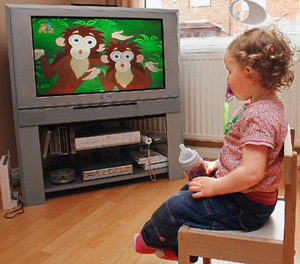
When reading a newspaper or magazine, listening to the radio, or watching TV or a movie, people must be aware that the information they are receiving is most likely biased toward an anti-Christian worldview.


Controlling Ethical Guidelines

Psalm 101:3 –  “I will set no wicked thing before mine eyes.”

Philippians – 4:8  “Finally, brethren, whatsoever things are true, whatsoever things are honest, whatsoever things are just, whatsoever things are pure, whatsoever things are lovely, whatsoever things are of good report; if there be any virtue, and if there be any praise, think on these things.”

Colossians 3:2 –  “Set your affection on things above, not on things on the earth.”

1 John 2:15-17 –  “Love not the world, neither the things that are in the world. If any man love the world, the love of the Father is not in him. For all that is in the world, the lust of the flesh, and the lust of the eyes, and the pride of life, is not of the Father, but is of the world. And the world passeth away, and the lust thereof: but he that doeth the will of God abideth for ever.”

From these texts we learn:

  • Don’t watch immoral images;
  • Think about positive ideas rather than negative, sinful ideas and/or images;
  • Think about spiritual realities rather than worldly, temporary things;
  • Avoid those things that produce lust and a love for the world.

Unfortunately, much of today’s media does the exact opposite. The ideas it presents are worldly, sinful, and tend to stimulate our sinful nature. Television is a perfect example of this. TV is the dominant form of media in our culture, and our ethical approach to TV watching can be applied to most forms of media today.

Television/ Internet Dominance

Note the Quote:  In our culture most people watch [TV] most of the time. After sleeping and working, watching images on a video tube is what we do with consciousness. It is our favorite way to pass time.

Some Startling Stats:

  1. 96% of American households have one TV, many have more than one.
  2. Children between the ages of 2 and 12 watch an average of 25 hours of TV each week.
  • Nearly half of all 12-year-olds watch an average of 6 hours of TV a day.
  1. By the time an American child graduates from high school, he will have spent 15,000 hours in front of a TV, compared with only 11,000 hours in the classroom.

Why should we be so concerned about TV? Because it is the most accessible and influential media source for most of us. Much of what comes through the TV screen is unethical from a Christian point of view.

  – David De Bruyn, Professor of Church History, Shepherds’ Seminary Africa

Christian View of Euthanasia

In 2015, the North Gauteng High Court ruled that Robert Stransham-Ford was permitted to commit medically-assisted suicide. Because he died a day before the ruling, the Supreme Court has ruled the case invalid.

Definition: The term “euthanasia,” comes from two Greek terms, eu meaning “happy, good,” and thanatos meaning “death.” Typically in our culture, the term refers to “mercy killing,” the deliberate killing of a person, through active or passive means, who is suffering an illness believed to be terminal.

Arguments for euthanasia:

1. People have a right to die with dignity. People can make autonomous decisions, including the
right to privacy and a dignified death.

2. It is an act of mercy on the suffering person.

3. It is an act of mercy on the suffering family.

4. It relives the family of a financial strain.

5. It relieves society of a financial burden.

6. The difference between biographical life and biological life.

The Two Categories

Euthanasia is usually divided into two categories:

• Passive euthanasia

• Active euthanasia

The patient’s desire to die does not completely determine the morality of the situation.

Biblical Principles Applied to Euthanasia

1. God, not man, is sovereign over life and death.

• Suicide is, in essence, self-murder which is prohibited by God. It is condemned in Scripture (Jonah 4:3; Job 3; 1 Sam 31).

• God is sovereign and He alone determines the length of our days (1 Samuel 2:6; Psalm 39:4).

• Because the Christian has been purchased by God (1 Corinthians 6:19-20), he is responsible to honor God in his life. He does not own himself. God owns him.

• Physical life is essentially good, not merely a means to another good. Our bodies are not incidental to our existence; they are an necessary aspect of our being. Thus our physical life in itself is good.

2. Killing an innocent human is wrong no matter how merciful it may seem to be (Gen 9:6; Ex 20:13).

• Man is made in God’s image; therefore, life is sacred. God is the only one who has a right to make or take innocent life.

• If one takes the life of another human, he gives up his own right to life.

• Circumstances do not change this principle.

• God uses pain and suffering for His own purposes.

3. There is a distinction between protecting life and prolonging suffering.

• The Bible commands us to protect the life of the innocent, the helpless, and the suffering. We should provide the ordinary means of sustaining life – food and water, shelter, normal medical care, etc.

• Christian ethics demand that the infirm be treated in a humane, compassionate way (Prov 31:6).

• With today’s medical technology, doctors can keep a person’s body functioning far beyond the time it would naturally die.

Evaluation of Passive Euthanasia

Natural passive euthanasia is withholding unnatural life-sustaining equipment, so as to allow a natural death. These would include respirators and artificial organs, kidney machines, artificial heart, etc.

Unnatural passive euthanasia is withholding natural means of sustaining life: food, water, and air. It remains then to understand what circumstances would permit natural passive euthanasia. 

1. Taking a life by euthanasia is never right, but allowing someone to die is not always wrong. Withholding food, water and air to do so is murder, because the action leads directly to death.

2. Modern technology has allowed us to keep alive a person with an incurable disease who is irreversibly dying. This is unnecessary.

3. Some technologies have to be distinguished from others.

4. The disease should be clearly irreversible.

5. The patient has veto power over the choice to not extend the life by artificial means.

*Material adapted from Brad Anderson & Norm Geisler

  – David De Bruyn, Professor of Church History, Shepherds’ Seminary Africa

Christian View of Abortion (Part 2)

Medical/Scientific Proof that an Unborn Child is Human

1. At the moment of conception the sperm fertilizes the egg, and a dramatic and instantaneous change occurs. These two cells form a new cell, which has a genetic uniqueness, completeness and wholeness as a one-celled zygote. Such a zygote formed at conception has all the genetic identity and programming to mature into an embryo, a fetus, a baby, a child, a teenager, an adult. The one-celled zygote is fully human life.

2. The embryo is genetically distinct from its mother. It has 46 chromosomes, its own DNA, and is kept separate from its mother’s system by the placenta. Thus, the baby is clearly not just a part of the mother’s body. It’s not independent of the mother, but it’s not the mother.

3. The heart of the baby is formed and operational very early in pregnancy, around the 20th day. Brain waves begin around the fortieth day. Heartbeat and brain activity are signs of independent life. All biological human functions are present by 12 weeks. The slogan “Abortion stops a beating heart” is true in most cases.

4. It’s clear that the baby is able to sense pain very early on in its life. It is able to react to various stimuli, such as sound, movement and temperature. Nothing magic occurs at birth which suddenly makes an unborn baby human. The baby is the same baby, whether inside or outside the uterus. Every unborn baby is a complete, individual, living human being from the earliest moment of his or her existence at fertilization. Whether or not the baby is able to sense pain or is dependent on the mother does not matter. An unborn child is distinct from its mother and is a fully human being who deserves the full protection of the law.

Medical science keeps pushing back the time of viability, i.e., when a baby can survive outside the mother’s womb. If killing a born, pre-mature baby is murder, then killing one of the same age, but still within the mother’s womb, is no less murder.
Currently, the edge of viability is at about 19 weeks after fertilization, and babies born at 22-23 weeks commonly survive (36 weeks is the normal gestation period). At 11 weeks, all organ systems are functioning. The baby could stand on an adult’s
fingernail. The baby even has eyelids, nails, and fingerprints. The baby has a skeletal structure, nerves, and circulation. From this age on, there is only growth in size and maturation of the organs already present. From a biological point of view, there is little difference between an unborn fetus and a born infant. If killing a child after birth is immoral, killing one a few weeks or months prior to birth is equally immoral.

Quality of Life vs. Value of Life

Since one cannot deny the biological data supporting the human life of an unborn child, abortion proponents have shifted the argument to the value of life rather than the presence of it. If an unwanted child would have a negative impact on the quality of the mother’s life, she should abort the child. If the child will be a financial or emotional drain on the parents, they should abort it. If the child will have physical or mental problems, abort it. Individual self-interest demands that unwanted babies be done away with. “Morality” for abortion supporters consists of giving women the freedom to abort their children if they so desire. Taking away this right to “self-determination” is immoral. They consider access to abortion a “basic human right.” The availability of safe and legal abortions is a sign of a mature civilization, they contend.

Biblical ethics demands that all humans hold value. From the very young to the very old, all humans share the image of God and possess the rights common to all people. Once someone tries to determine what lives are “valuable” and what lives are not, humanity starts sliding toward barbarism. Any scheme that attempts to define “worthwhile” or “useful” life may easily exclude the unborn, blacks, Jews, gypsies, the handicapped, mentally ill, infirm aged, or whoever those in political power decide do not meet their standards for human personhood. It’s happened many times historically, and abortion proponents want to continue the practice. The weak and handicapped need special help and attention, not destruction. Further, no one has the right to murder anyone else. Taking away a woman’s ability to legally kill her child is not immoral. Society should protect and nurture the innocent, not allow them to be flushed down the toilet.

Conclusion: According to the biblical evidence, God recognizes the humanity of a child long before its birth. Unborn children, at whatever stage of development, are individual persons with all the rights afforded to other humans. Because an unborn child is in the image of God, we must acknowledge the sanctity of his life. Medically speaking, the unborn child is just as human as a born child is. Therefore abortion is the taking of human life, and is condemned as the sin of murder. Abortion is not the answer to the problem of unwanted pregnancies. Human life is a gift from God, and its origin in biological terms reflects the order of creation. Specifically, at the point of conception the one-celled human zygote is a person in the fullest theological sense, an image-bearer of God deserving the same respect and protection that we as Christians afford all human beings.

How should Christians act?

  • Support Christians that take action against it – Abort 97.
  • Oppose ‘pro-choice’ rhetoric with the Christian alternative.
  • Volunteer with crisis-pregnancy clinics
  • Support adoption and those who adopt.
  • Vote for political parties that oppose abortion.

*Material adapted from Brad Anderson*

  – David De Bruyn, Professor of Church History, Shepherds’ Seminary Africa

Christian View of Abortion

History

The practice of abortion has been common throughout history. However, many cultures considered abortion to be a serious crime. Part of the Hippocratic Oath, which most doctors endorse, states in part, “I will not give a woman a [drug] to produce an abortion.” The Jewish people were historically against the practice, as were the leaders of the early church. Until a few decades ago, most laws in the US recognized that a woman was “with child” at the moment of conception. In the mid-1960’s, abortion laws became more tolerant in the US. The Supreme Court legalized abortion in the landmark Roe v. Wade case in January 1973.
Definitions

Abortion is the expulsion or removal of a child from the uterus at a stage of development when it is incapable of independent survival, resulting in its death. A “zygote” is a fertilized egg, the earliest form of the baby. “Embryo” refers to a child at the early stages of development. “Fetus” refers to a baby after the first three months of life. Most abortions are performed within the first trimester (3 months).

The Procedure

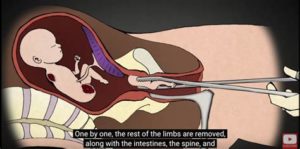
Abortion is likely one of the most barbaric and inhumane practices ever devised by sinful man. Normally a surgical instrument of some sort is inserted into the womb. The doctor then uses the instrument to cut the unborn baby in pieces. Sometimes a sharp-tipped vacuum pipe is used to both cut the baby up and suck him out. Another process injects a strong salt solution into the fluid surrounding the baby. The salt poisons the child to death. Perhaps the most gruesome method is the D & E, or “partial birth abortion,” in which the doctor delivers the baby’s body except for the head. He then kills the baby, collapses its skull, and delivers it the rest of the way. The newest method of abortion is in the form of a pill, RU 486. This drug causes the uterus to shed its lining, which dislodges the fertilized egg or embryo, all of which is expelled. RU 486 is more than 95% effective in terminating a pregnancy within the first 7 weeks.

The Ethics of Abortion

The ethics of abortion revolves around the question of when an unborn child becomes a genuine human being, deserving of the normal protections that all other humans expect.

Typical “pro-choice” arguments:

  •  A woman has the right to choose what happens to her own body.
  •  The fetus is not a human being. It is a glob of tissue, potentially human, but not fully human. The fetus is not an                    independent person but is totally dependent on the body of the woman for its life support and is physically attached to        her. Only after birth can the baby be considered its own person.
  •  An unwanted pregnancy would be inconvenient, expensive, and may needlessly endanger the life of the mother.
  •  If unwanted babies are not aborted, they will likely be raised in unloving, abusive families. Motherhood should never          be punishment for having sex.
  •  An embryo or fetus aborted in the first trimester cannot feel pain because its nervous system is not yet functioning to        that level. Medical researchers and medical literature say that the pathways in the brain that permit the sensation of          pain develop after 30 weeks. So killing the fetus before that does not cause pain.
  •  Laws have never stopped abortion, but only banished it to back-alley butchers. Abortions will happen whether the              practice is legal or not. It’s best to make it legal to protect all parties involved.

Biblical Principles Supporting the Humanity of an Unborn Child
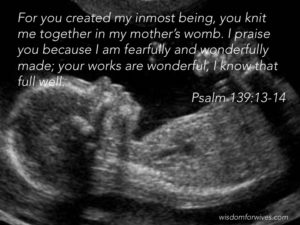
There are several lines of evidence in the Bible that strongly suggest that an unborn child is fully human and just as valuable as anyone else.

1. In the Bible, Personal Pronouns and Proper Names are Applied to Unborn Children.

Psalm 51:5 – “Surely I was sinful at birth, sinful from the time my mother conceived me.” Psalm 139:13 – “For you created my inmost being; you knit me together in my mother’s womb.” Luke 1:44 – “As soon as the sound of your voice reached my ears, the baby in my womb leaped for joy.”

Human emotion is explicitly attributed to the unborn John. Emotion is an aspect of personality. Thus it would seem that the Bible attributes personality and therefore personhood, to the unborn.

2. The OT Law Views the Unborn as Fully Human Persons.

Exodus 21:22-25 – The point of the passage is that both the mother and the unborn child are of equal value. If neither the premature child nor the mother is hurt, a simple fine is levied. However, if either is hurt, the guilty party will be punished in kind, even to the point of death. Thus the Mosaic Law views both the unborn and the adult as equally human, equally valuable. “The text then gives no credence to abortion of the fetus but rather reveals the sanctity of both adult and fetal life.”

3. The Bible Indicates that Humanness is Transferred to the Unborn Child.  

Psalm 51:5 – “Surely I was sinful at birth, sinful from the time my mother conceived me.” This verse strongly supports the idea that a fetus is indeed an individual human person. A glob of non-human tissue cannot be “sinful.” But David asserts that he was sinful from the time of conception, which could be true only if he were fully human from that point. Every aspect of the parents’ humanity is transferred to the newly conceived child. The fetus is by nature as fully sinful and as fully human as his parents.

4. God’s Interest in a Person Begins Long Before Birth.

Psalm 139:13-16 – This passage strongly suggests that much more is going on in the womb than just the growth of a bunch of cells. David attributes all the activity to God—God possessed, covered and made David while still in the womb. God skillfully formed the baby’s body. God even saw him prior to birth. His “embryo” (unformed body) and even the course of his life was determined. Hence, in God’s eyes, even an unborn baby is a person.

Jer 1:5-“Before I formed you in the womb I knew you, before you were born I set you apart; I appointed you as a prophet to the nations.” Isa 49:1 – Before I was born the LORD called me; from my birth he has made mention of my name.”

The general teaching of the Bible is that a child is human, whether before birth or after. Hence, the taking of the life of an unborn child is murder.

  – David De Bruyn, Professor of Church History, Shepherds’ Seminary Africa

Understanding & Counselling Youth: A Biblical Cardiology (Part 4)

2. A Biblical Understanding of the Heart (continued)

2.3 New Hearts 
God Himself knows that no teenager, or any person, will ever start to live, act, and feel rightly until they first think, want, and   worship rightly.  And where does all thinking, wanting, and worshipping begin? In the heart.  Thus God declared to His people, “I will give you a new heart and put a new spirit in you;  I will remove from you your heart of stone and give you a heart of flesh.”  He also promised that He would put His “law in their minds” and “write it on their hearts” (Jer. 31:33).  In the same way, Moses and Jeremiah, like many other ‘people-helpers’ in Scripture, called for change starting at the heart level  “Circumcise your hearts…”(Deut. 10:16; Jer. 4:4).

Notice carefully – no man or woman on their own can obtain a new heart by their own righteousness or effort.  Only the Creator can perform the transplant.  It happens at the moment of conversion, otherwise known as regeneration – new birth.  A new heart and new life comes “not of human decision…but is born of God” (John 1:13).  As Peter exclaimed, “Praise be to the God and Father of our Lord Jesus Christ!  In his great mercy he has given us new birth… through the living and enduring word of God.” (1 Pet.1:3, 23).  Any room where people hear and respond (in repentance and faith) to the gospel of Christ becomes a delivery room in which new life is born!  Africa and the world will find no lasting cure for troubled youth outside of this revolutionary message that awakens dead youth and transplants a new heart (cf. Eph. 2:1-10).  Only through biblically sound, gospel-centred counsel will we see teens becoming “new creations” where “the old” has really gone and “the new” has really come (2 Cor. 5:17)!
Conclusion
Of course youth ministry and any youth counselling does not stop with evangelism.  But sadly, most counsel today never starts with evangelism either, which is why it needed to be emphasised above.  Nothing is more practical and relevant than to introduce an unsaved youngster to the “Wonderful Counsellor” (Isa. 9:6), and to His chief “Comforter-Helper” the Holy Spirit (John 14:26; 15:26; 16:7), and to His favourite advisor, the Scriptures (Rom. 15:4; Ps. 119:24). As Augustine, a great ‘cardiologist’ from the 5th century, once prayed, “Thou hast formed us for Thyself, and our hearts are restless until they find rest in Thee.”

The biblically wise and effective counsellor will learn to recognise what heart issues lay beneath the troubles a young person is facing.  If a teenager does not clearly understand the Christian gospel and give evidence of true saving faith, we must lovingly use their problems as a doorway into showing them that their greatest and most basic need is for salvation – a new heart (called “pre-counseling” by some) (Adams, 1979:309-326).
But once a youngster has come to Christ, the process of heart transformation has only begun.   Discipling these youth must not stop with such basics as Bible study, prayer, church involvement, and evangelism – they must also learn about the lifelong process of “progressive sanctification,” the dynamics of Christian growth (Tripp, 1997:107-125, 167-190; Adams, 1979:233-275).  Too often today’s churches train believers to be very active in church things, yet if asked how to overcome life’s problems biblically, many will answer with vague Christian clichés: ‘just go to church, pray, and read the Bible,’ ‘let go and let God,’ and the like.  How many of our youth are gaining a biblical “heart awareness,” learning to recognise idols of the heart and sinful
motives and to replace those with godly desires and habits (Tripp, 1997:89-92)?  They will never mature very far in Christ without learning how to relentlessly battle temptation by “putting off” ungodly attitudes (roots) and actions (fruits), and “putting on” godly attitudes and actions (Eph. 4:22-32; Col. 3:5-17).
Moralistic ‘fruit-stapling’ will never reach the root of the problems our youth are facing, even if it does polish up their lifestyles for a while.  And therapeutic remedies, which often turn the already self-preoccupied teenager to look even further inward for answers, also leave teens confused and still searching.  Anything short of a biblical cardiology – a careful biblical diagnosis and specific biblical remedy, applied in the context of a loving relationship – will fail to teach our youth how to best function in this world where God has placed them.  May our God launch a world-wide youth revival in our homes, churches, and nations as counsellors become better equipped with a more biblical understanding of the heart.

– Tim Cantrell, President and Professor of Systematic Theology, Shepherds’ Seminary

Understanding and Counselling Youth: A Biblical Cardiology (Part 3)

2. A Biblical Understanding of the Heart (continued)

2.2 Our Terminology

You will have noticed by now the sense in which the word “heart” is being used.  This term in Scripture is distinctly different from modern, Valentines usage where “heart” usually refers to the passions and emotions in contrast to the mind and intellect (e.g., the common but unbiblical distinction between “head knowledge” and “heart knowledge”)(Adams, 1979:114).  In both the Old and New Testaments, the Hebrew and Greek terms for “heart” include the mind and intellect (cf. Job 12:24; 36:13; Jer. 17:9,10; 23:20; Ezek. 11:5; Hos. 7:11; Matt. 13:15; Mark. 7:19-23; 11:23; Luke 5:22; Acts 5:4; 2 Cor. 9:7; Heb. 4:12; James 1:26) (Adams, 1979:114).  It is consistently used to refer to the whole of our immaterial, invisible inner life (and thus is often closely linked with “soul” and “spirit”), in contrast to our visible, outer man (Adams, 1979:114).  And despite “cardiology” being only a physical-medical term today, one should remember that it stems from a Greek term for heart, “kardia”, thus making a ‘cardiology’ also a legitimate realm for spiritual physicians and counsellors.  Likewise, every soul-helper should remember that they are engaged in true “psychology” (the study of the “psyche”, the Greek word often referring to the “soul”). One of my professors used to say, “The heart is the mission control centre of life.”   This is precisely what Proverbs 4:23 states:  “Above all else, guard your heart, for it is the wellspring of life.”  We live out of our hearts (Tripp, 1995:19-24; van der Walt, 2001:16).  Here is some of what Scripture shows originating in the heart: thinking, loving, hating, fearing, remembering, knowing, discerning, perceiving, talking, reasoning, understanding, doubting (Gen. 6:5; Deut. 6:5; Lev. 19:17; Ps. 119:11; Deut. 8:5; Prov. 18:14; Eph. 1:18)(Adams, 1979:114).

2.3 Natural Hearts
What kind of hearts are we born with?  Contrary to popular opinion, the Heart-maker Himself declares in His Word that since the Fall we all inherit sinful and depraved hearts.  King David announced, “Surely I was sinful at birth, sinful from the time my mother conceived me”(Ps. 51:5; cf. Jer. 17:9 as quoted above).  His son Solomon agreed:  “Foolishness is bound up in the heart of a child” (Prov.22:15).  Anyone seeking to discover humanity’s true potential apart from Christ should listen to God’s answer through the Apostle Paul: “…all are under sin…there is no one righteous, not even one; there is no one who understands, no one who seeks God.  All have turned away, they have together become worthless; there is no one who does good, not even one….  all have sinned and fallen short of the glory of God” (Rom. 3:9-12, 23; cf. Rom. 1:18-32). Despite God’s unavoidable diagnosis, society will let go of almost any belief before abandoning the notion of humanity’s inherent goodness.  Blame is cast in any
direction except the mirror, holding anyone or anything in our environment responsible except ourselves.  Emotional disturbances among youth must have been caused by a bad upbringing or peer ‘victimisation’.  ‘Innocent’ youth are blindly led away into immorality, addictions, or crime by oppressive peer pressure. Angry or depressed youth easily blame parents for not building up their self-esteem, or not nurturing their self-actualisation. 

Thanks to psychotherapy’s massive influence, the knee-jerk reaction today whenever a youth crisis arises is to immediately blame some aspect of their environment.  As predictable as the rising sun, fingers will point at poor socialisation, economical disempowerment, educational deprivation, or supposedly biological factors.  But who will love our youth enough to proclaim that such blame-shifting only robs them of any hope for change, since many youth have no imminent prospect of a better environment?  One must also notice how these ‘victimization’ theories unravel when young people in the ideal environment still rebel and transgress.  Are we saying that one’s environment has no significant influence on attitudes and behaviour?  Absolutely not – who could deny the “shaping influence” of Egypt upon Joseph and Moses, Babylon upon Daniel, or Hellenistic culture upon Paul (Tripp, 1995:10; cf. other evidences in Prov. 29:21, Col. 3:21, etc.)?  Yet in all four of those instances, we see men (some in their youth) who refused to allow circumstances to determine their responses to life’s pressures.  Poverty, abuse, broken homes, sickness, and the countless other stresses life throws at a young person are indeed unjust and abusive often, and are many times horrific and heart-wrenching to observe.  Such chaos is often a very influential context of youth rebellion; however, it is not the main cause.

Remember that the ship is governed most by the set of the sails, not the direction of the breeze (Tripp, 1995:19). None of us is passively moulded by life’s influences; rather, our hearts actively interact with our experiences based upon our Godward orientation (Tripp, 1995: 10-17).  We must realise that every person is a worshipper, at all times.  The question is only:  Who is being worshipped, God or idols? (cf. Exod. 20:3-4; Ezek. 14:1-8, “heart idols”; Rom. 1:18-32; 1 Cor. 10:14; Eph. 5:5; Col. 3:5; 1 Jn. 5:21, etc.)  Likewise,  Scripture repeatedly shows that we are constantly seeking, craving, trusting, fearing, loving, and serving someone or something (e.g., Prov. 3:5-6; Jer. 17:5-7; Matt. 6:24, 32-33; 10:28; Gal. 1:10; 2 Tim. 3:4).  Rather than our circumstances mastering us, it is actually the object of our worship and our desires that will most determine our outlook on life.
As creatures made in God’s image, we are always “active responders” to life, never merely “passive receivers” (Tripp, 1995:16).
These core convictions which form a sound, biblical cardiology are rooted in such Divine diagnoses as these: “What comes out of a man is what makes him ‘unclean.’  For from within, out of men’s hearts, come evil thoughts, sexual immorality, theft, murder, adultery, greed, malice, deceit, lewdness, envy, slander, arrogance, and folly.  All these evils come from inside and make a man unclean” (Mark 7:20-23). “What causes fights and quarrels among you?  Don’t they come from your desires that battle within you?  You want something but don’t get it.  You kill and covet, but you cannot have what you want.  You quarrel and fight.  …When you ask [God], you do not receive, because you ask with wrong motives…” (James 4:1-3).

Who then can deny, despite many other severe problems faced by today’s youth, that their hearts are the heart of the problem?  Despite their frequent lack of real ‘heart-awareness’, beneath everyone of their personal and interpersonal problems lies an inner self that is constantly choosing how to respond and whom to serve.  Young people are interpreters.  They do not live life based on the facts alone, but based on their interpretations of the facts.  Unkind friends do not force a teen into anger or depression; rather, that teen has concluded (interpreted) that he cannot trust God’s sovereignty, wisdom, and goodness in hard times and must rather react and take things into his own hands in some way.

Our biblical evaluation now leaves us with an inescapable implication:  Unless our youth experience change at the heart level, all efforts at reforming them are like stapling fruit onto the branches of a dead tree.  Surely there are some temporary benefits to behavioural adjustments, but true and lasting change must come from within (Col. 2:20-23; Tripp, 1997:110-113; van der Walt, 2002:16, 34).  But how?  How can this be accomplished for our contemporary youth?  What is required – repaired hearts, or more nurtured hearts, or more educated hearts?  No – only new hearts will do!  Nothing short of a complete heart transplant will rescue our young people.  But there is hope – God is in the business of heart transplants and has a 100% success rate and eternal warranty!

– Tim Cantrell, President and Professor of Systematic Theology, Shepherds’ Seminary