The Puritans in Africa, and a Warning Against Christian Nationalism- A Book Review by Tim Cantrell

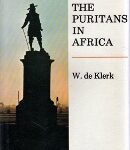
Though written fifty years ago, this fascinating history of the Afrikaner is a timely read, with global news headlines about Trump targeting South Africa with sanctions and providing asylum for Afrikaners. I’d had my eye upon this book a long time, with its intriguing title: Puritans in Africa: A Story of Afrikanerdom, by W.A. de Klerk.[1]

The author was a brave, dissenting voice from within, pleading with his fellow Afrikaners in the heyday of apartheid in the 1970s (reportedly, this book was subsequently banned from the country). For any lovers of South Africa, of her people, her history and her potential – here’s a gem for you. Plus, for any who are embroiled in current debates about Christian Nationalism, take note – it’s been tried before.

As one reviewer writes: “At the end of De Klerk’s moving account of Afrikaner history, as unsparing of its shortcomings as it is alive to its virtues, this book shows how the ancient Calvinist and Huguenot [i.e., biblical] conscience of the Afrikaner is troubling him today as never before, compelling him to clamour for correction of the manifest injustices and imperfections of his society…. I cannot recommend this book too strongly, both to Afrikaners and their enemies.”

Here was one takeaway for me: I knew of D.F. Malan as the founder of apartheid, Verwoerd the architect, and Vorster the enforcer. But here I learned the pivotal roles of apartheid’s leading orator (P.J. Meyer), philosopher (N. Diederichs), and theologian who most adeptly twisted Scripture (G. Cronje). Ideas have consequences, so the more we understand a bad root, the better we can explain the bitter fruits and learn hard lessons for the future.

What actually led me to discover this second-hand treasure was a recent sermon series I was doing in our church on true Calvinism. Because false Calvinism has probably done more damage in South Africa than any other nation in the world. How then do we know the difference between the use and abuse of sound doctrine? What biblical lessons can we learn from the nearly 400-year Afrikaner story on our African continent?

Here’s the essence of De Klerk’s plea to his beloved Afrikaners in 1975, after laying out his case against the evils of apartheid:

What now are the facts which they, who in the course of three centuries built so much – farms, towns, churches, schools, a language, a great variety of excellent public institutions, in fact a whole indigenous European culture in Southern Africa – what is the reality they must face? (p. 334)

Here then are four brief biblical warnings gleaned from De Klerk’s book – against most-favoured nation status, against conflating God’s kingdom with man’s, against proud tower-building, and against misusing great theologians. We’ll then conclude with God’s remedy.

Divine Right?

He warns that if we reject the longstanding belief in the divine right of kings, which was unbiblical and harmful, we should also reject the “divine right of nations” (p. 168). He repeatedly shows the government over-reach, unchecked power, oppression and racism, that are the outcome of one ethnic group claiming divine sanction for their conquest of other nations. If any of us become convinced that our particular people possesses ‘VIP’ status in God’s eyes, watch out.

What De Klerk omits, however, is to show how covenant theology (unintentionally) fuels that myth of ethnic superiority and feeds Gentile pride, by claiming that the Church has replaced Israel (in contrast to what Rom. 9-11 teaches). Too often in church history, infant baptism and amillennialism have led people away from the need to repent and believe to be converted, and has led them instead toward a deadly assumption of salvation (presumptive regeneration) and a state church, often associated with a certain ethnicity – a salvation by race, instead of grace.

Whose Kingdom?

De Klerk warns about apartheid leaders equating man’s earthly kingdom with God’s kingdom, about confusing the eternal City of God with any temporal City of Man. We must beware of obsessing over utopian dreams (whether of a more Marxist, left-wing flavour, or a more right-wing flavour), and creating a false gospel, with our own political messiahs and earthly saviours to whom we hail our ‘hosannas’. The author cautions:

The socio-political ideal allied to power…shot forth out of Puritan soil as a vigorous but hazardous mutation of Calvinism. Its fruits looked deceptively fine, promising, in fact, eternal life. The effect of eating, however, brought about a sudden deadly consciousness of nakedness (p. 188).

De Klerk then rightly asks, “In what measure has the ideal of Christian nationalism become the ideal of Nationalist Christianity? Where this has indeed happened, either because of ignorance or deliberately justifying immoral politicizing – in either case it’s a sin of blaspheming the name of Christ” (p. 342).

A Tumbling Tower

One of the many self-destructive ironies of apartheid was that one of their favourite proof-texts for “separate development” (of racial groups) was how God divided the nations at the Tower of Babel (Gen. 11). Yet in the end, the apartheid edifice of utopian racial purity has come crashing down with a terrible sound, as God has humbled their selfish ambition (pp. 310-13).

De Klerk sharply contrasts this to the original Calvin who was renowned for his Christlike meekness and submission to the Lord and His Word. As Calvin wrote in his Institutes:

As the orator when asked, ‘What is the first precept in eloquence?’, answered, ‘Delivery’. ‘What is the second?’ ‘Delivery’. ‘What is the third?’ ‘Delivery’. So if you ask me in regard to the precepts of the Christian religion, I will answer, ‘First, second and third, is humility.’

O that all of us who name the name of Christ – in our lives, homes, churches and nations, would keep learning how to “walk humbly with our God” (Micah 6:8).

Hijacking Calvin & Kuyper

De Klerk plainly shows where Calvin’s own teachings “consistently stressed the value of the individual” (p. 204). The whole meaning of the Reformation, as restated in Geneva, was a “revolt against the collective” and against tyranny of all kinds. Next to the Bible and Calvin, the most abused theologian by the Afrikaner government was Abraham Kuyper (Dutch Prime Minister and phenomenal Christian leader; died 1920). Yet De Klerk shows how emphatically Kuyper would’ve opposed apartheid in his famous, Lectures on Calvinism at Princeton (in 1908):

Calvinism was bound to…proclaim the liberty of nations, and not to rest until both politically and socially every man, simply because he is a man, should be recognized, respected and dealt with as a creature created after the Divine likeness (p. 205).

True Calvinism

In closing, allow me a few caveats. De Klerk makes no mention of the role of true Calvinist missionaries in South African history, like Moffat and Livingstone and many others, plus the reformers like Andrew Murray from within Afrikanerdom. The author also misses the true genius of Calvin as an expositor of Scripture, not just a wise leader. And I found the book too sympathetic towards secular philosophies, such as Hegel, Kant, and Marx. Yet still a very worthwhile read.

As De Klerk wrote in the dark depths of 1970s apartheid, he ended his book by asking, “How then could renewal come?” What was the only way forward for the Afrikaner government amidst such a divided, troubled nation? His answer:

…there is, in fact, only one alternative – to rediscover their own most genuine tradition. This would mean returning to the original Calvin. …Man relying on his own final abilities commits the sin of idolatry. Let no man flatter himself. Left to his own designs, he is a devil. The happiness he needs is entirely from God. Power as the short cut to survival, identity, fulfilment and happiness is therefore also against the truest tradition of the Afrikaners: the original Calvin (pp. 338-39).

De Klerk proves that the need is for true ‘radicals’ who go back to real “roots” (the radix) – the biblical, Reformation roots are the best hope for healing such a broken land. The only reason to build on true Calvinism is because Calvin built on the “one foundation” of Christ, the Cornerstone; we follow Him only insofar as He follows Christ and His Word (Acts 4:11-12; 1 Cor. 3:11; 11:1; Heb. 13:7).

May the risen Lord by His Spirit shine the light of His Word across this beloved country of South Africa for the glory of His name, the saving of many souls, and the good of our land.

[1] The author, W.A. De Klerk, is not to be confused with the later Prime Minister, F.W. De Klerk, who won the Nobel Peace prize with Mandela for ending apartheid.

Marriage Procrastination: Eight Excuses for Staying Single

Currently in South Africa we have some 24 million singles (well over half of our adult population) and marriage statistics continue their rapid decline, with more people waiting longer to tie the knot, if ever.  Top reasons South African singles give for delaying marriage are:  “Desire for independence; self-esteem and relationship reluctance; economic and social reasons; past relationships and fear of commitment”.  All four of these reasons have one thing in common: they are usually selfish excuses.  It is no minor offense to reject God’s good institution of marriage, His wise creation ordinance that is the cornerstone of civilisation and the primary building block for all of society.  A nation rises or falls based on its view of marriage.

Hardly a week passes that I do not see or hear about another godly young lady nearing the end of her child-bearing years and desiring marriage, yet still waiting in vain for a husband.  How long, O Lord, until the men wake up and see their need for a wife, until they open their eyes to the beauty and goodness of Your design for marriage and family?  Have men outsmarted their Creator and now revised His Word by saying, “It is good for man to be alone”?  Is this our Protestant version of Rome’s unbiblical vows of celibacy, where singleness becomes more spiritual than marriage? (See 1 Tim. 4:1-6 which refutes all forms asceticism and forbidding of marriage.)

Both Jesus and Paul affirm that there is only one good reason for staying single:  “for the sake of the kingdom of heaven”, for a missionary calling or during fierce persecution and “distress” (Matt. 19:12; 1 Cor. 7:29-35).  That kind of necessary, gospel celibacy is a very unique, special “gift” and calling from God (1 Cor. 7:7,20,24).  But all other forms of singleness are not a gift, but a hard trial.

God’s grace is all-sufficient for the lonely burden of singleness; but we should not air-brush or gloss it over as a blessing, when God’s Word clearly shows it is an unnatural affliction that violates His design for our sexuality (Gen. 2:18-25; Matt. 19:3-6).  Never does Scripture call a barren womb a blessing (1 Sam. 1-2; Ps. 113:9).  In the case of an eligible bachelorette whom blind and immature men fail to pursue, it is one of God’s “thorns” beyond her control, and He will enable her to be content and use her singleness for Him (2 Cor. 12:9-10; Php. 4:11-13; 1 Cor. 7:29-35).  In the case of passive men failing to pursue marriage, it is a self-imposed curse (1 Pet. 2:20; 4:15).  But in neither case is it some ‘gift of singleness’, as some mistakenly label it.

For members in good standing in their local churches, here are eight unbiblical reasons for staying single.  These warnings especially apply to Christian men who have a job, are able to provide for a wife, but don’t pursue marriage; yet many of these cautions also apply to single ladies who’ve been playing hard-to-get for too long.  By the grace of God and godly counsel and effort, you can learn to break any of these bad habits and overcome these excuses; but only after you first identify and renounce them.

(1) Unrealistic expectations – Is no one good enough to meet your standards of perfect character?  As if you are the perfect spouse?!  As the book title sums up well, Christian marriage is When Sinners Say, ‘I Do’, when two very imperfect people, by the power of God’s Spirit, learn to love each other as Christ loved the Church (Eph. 5:18-33).  Mature believers do not wait to find a soul mate; they get married in the Lord and learn to become soul mates.

(2) External focus – Are you more concerned about their looks than their character?  That can be selfish lust more than biblical love.

(3) Fear of commitment – Are you married to your own selfish autonomy and individualism?  Do you have more of a consumer view of marriage rather than the biblical, covenantal view of a deep unity through self-giving?

(4) Selfish habits – Are you hooked on your own immature or ungodly habits: porn, video games, endless hobbies, travel, etc.?  Have you allowed our culture of endless information, entertainment and diversions to distract you from the clear, biblical priority of marriage and starting a family?

(5) Paralysed by your past – Maybe you grew up in a home full of conflict, watching a miserable marriage end in an ugly divorce or cold standoff?  Or perhaps other past hurts or failures have left you nervous about ever marrying?  But if you are truly saved, Jesus is your Lord, not your past.  God’s Word defines you, not your hurt or emotions.  The gospel is your identity, not the abuse or pain you’ve faced, nor your own failures (Tit. 2:11-14; Gal. 2:20).  His grace is sufficient, our hope for change is real as Christians (2 Cor. 5:17; 12:9-10).  The tomb is empty, Jesus is alive, and in Him you are an overcomer, “more than a conqueror” (Rom. 8:18-39).

(6) Laziness – Are you avoiding the sacrifice, hard work and effort required in marriage?  In Proverbs, that person is called a “sluggard” (Prov. 6:6-8; 13:4; 20:4).  It’s also robbing your own parents, your church and your community of godly offspring, of more disciples of Christ, of the salt and light so badly needed in our dark and decaying culture (Mal. 2:14; Matt. 5:13-16; 28:18-20).  You wouldn’t be here today if it weren’t for marriage, so you owe it to the next generation.

(7) Materialism – Are you afraid of any financial instability, instead of trusting God to provide and working hard?  Beware of materialism and affluenza (Matt. 6:20-24).  Ironically, those who do marry are far more likely (statistically) to be financially stable.

(8) Career-olatry – Are you making an idol out of your career, instead of living for biblical priorities, and seeing the high value and big price tag that our Maker puts on marriage?

Perhaps a 9th excuse could be, ‘I am pursuing marriage, but keep getting rejected!’  But make sure you ditch the dating apps and let your local church do the matchmaking as they truly get to know you.  Where better to find a godly spouse if not in a healthy church (or through recommendations between likeminded churches)?  Good pastoral counsel is also available for the African context in dealing with common cultural barriers to marriage (e.g., lobola, family pressure, etc.).

I love the way one wise pastor put it, “Seven Reasons Young Men Should Marry Before Their 23rd Birthday”.  That’s a preacher who takes the Bible seriously about the blessings of marrying young and having lots of children (Psalms 127-128).  That’s a loving shepherd who specifically “points the way” toward godly choices and right priorities (1 Tim. 4:6; 5:14; Titus 2).  Our Puritan forefathers saw “undue delay of marriage” as a violation of the 7th Commandment, a snare to the soul, a tempting of both God and man, and a potential cause for suspension from the Lord’s Table or church discipline.

In the past three years, my wife and I have had the great joy of seeing our three older children marry young (at ages 21, 20, and 19).  Of course it isn’t easy letting them go, but that’s what we raised them for – “arrows” are meant to be sent (Ps. 127:5).  Our church in Johannesburg built a beautiful sanctuary with also this aim in mind – celebrating as many weddings together as possible with our church family.  Local churches must be loving islands of biblical hope amid the raging seas of a hateful society attacking the home.  We must be lighthouses of sexual purity that shine all the brighter as our immoral world gets darker.

Our children and grandchildren must grow up seeing lots of worshipful weddings, happy couples, and fruitful families.

Married life is God’s norm for most believers and is a noble, high and holy calling – “to be held in honour among all” (Heb. 13:4).  Yes, this should include rigorous pre-marital counselling (ensuring eligibility, etc.); here is my first homework assignment for every couple.

To my younger brothers in the Lord, I especially say:  ‘Soldiers of Christ, arise and go fetch a bride!  Man up, be strong and courageous, for the Lord is with you’ (Josh. 1:8-9).  “He who finds a wife finds a good thing and obtains favour from the Lord” (Prov. 18:22).


Dare to Pray! (Mark 11:23-24)

Prayer is how our entire Christian life began – asking God to save us, calling on Jesus’ name.  Prayer sustains us throughout our Christians lives – both individually and corporately as His Church, day and night.  Our last breath will probably be a  prayer uttered to our heavenly Father before we arrive home in Heaven, where prayer will no longer be necessary.

But until that day, we must pray:  We cannot see God’s true power at work in this world outside of prayer.  We saw last Sunday in Matthew 17 and Mark 9 the disciple’s failure in ministry because of the sin of prayerlessness, rooted in unbelief.  But I also wanted to explain a bit more about Christ’s powerful remedy of believing prayer, as reiterated further in Mark 11:

And Jesus answered them, “Have faith in God.  Truly I say to you, whoever says to this mountain, ‘Be taken up and thrown into the sea, and does not doubt in his heart, but believes that what he says will come to pass, it will be done for him.  Therefore I tell you, whatever you ask in prayer, believe that you have received it, and it will be yours (Mk. 11:22-24).

We’ve all heard these kinds of Bible verses twisted, manipulated, and hijacked beyond recognition by prosperity preachers, stripped totally out of context.  But what then does it actually mean?  Do we dare to accept the full and joyous weight of what Jesus is truly teaching here?

Jesus is now headed into His final Passion week, with the agony of Good Friday in view.  He is saying to His disciples:  ‘Men, you are about to face the toughest week of your entire life.  Your faith is about to tested and refined through the fiery furnace of suffering.  You will be tempted to panic and despair, you will want to give up.  But don’t do it!  Keep trusting My Father, just as I had to trust Him throughout my earthly life.’

Further, our Lord is teaching the Twelve and us all:  ‘Remember what God did for Me through faith.  Remember that cursed fig tree, remember Lazarus walking out of his tomb, remember the 5,000 being fed, the calm seas after I rebuked the storm, the sick healed, the lame raised.  Remember that I worked these miracles through prayer. Remember the whole nights I spent in prayer, remember how often I lifted My eyes upward, how often I groaned heavenward in prayer.’

Here is the one unshakable conviction that led Hudson Taylor to suffer and give his life for 51 years to see inland China reached and at least 18,000 souls won to Christ:  “There is a living God.  He has spoken in the Bible.  He means what He says and will do all that He has promised.”  After Taylor died, one bishop said this about him:

The power inherent in a simple faith, without any accessories…, remains an awe-inspiring and tremendous fact. …We can be thankful for the one deep lesson taught to this generation by the founder of the China Inland Mission, the power of the pure flame of passionate belief.  …The spiritual force has been so great that no church or denomination can show so imposing a mass of missionary agents in China as the Inland Mission….

By the time of Hudson’s death, over 800 missionary recruits had come to join him in China!   His biographer states:

…the secret of it all was Hudson Taylor’s simple, childlike, unshakable faith in God.  He is simply inconceivable apart from his faith in the Word, and character, of God.  There is no other explanation of the man. …If there is one Scripture, more than another, inseparably associated with [the name Hudson Taylor], it is [this]: Mk. 11:22,  “Have faith in God.”

 Oh that God would raise up among us here more Hudson Taylor’s who will trust God so fully that they too will take great risks and accomplish great exploits in Christ’s cause!

But let’s be real clear on what faith is and what it is not. There is nothing that Satan works harder to confuse Christians about than the nature of true faith:

What Faith is Not

Biblical faith does not say, ‘I can do this; I have enough faith; I have the potential, I am capable; I’m positive, I refuse to be negative; and I expect God to grant my every wish (like some fortune cookie or genie in a bottle).’  Disney theology is unbiblical, selfish, and very man-centred:

There can be miracles, when you believe
Though hope is frail, it’s hard to kill
Who knows what miracles, you can achieve,
When you believe, somehow you will
You will when you believe.
…Just believe, just believe…

Faith is only as good as its object.  People of every religion and people of no religion talk about “faith”.  Even faith in Coca-cola or boerwors may feel good for a while, and it can even improve your health and enhance your life temporarily just to have some kind of faith/hope – it’s called ‘the placebo effect’.  But Christian faith trusts only in the God of the Bible, the “God and Father of our Lord Jesus Christ” (Eph. 1:2).

Jesus says, ‘If you have true faith, even if it is the size of a tiny mustard seed, you can move mountains!’ (Matt. 17:20). It’s not about the size of our faith; it’s about the size of our God!  God can take the most pathetic, puny faith and do awesome things:  Like when Peter was about to drown at sea, but then he cries out in prayer to Jesus, and he is answered for his “little faith” (Matt. 14:29).  Or that desperate father of the demonised boy in Matthew 17, who runs to Jesus, cries out, “I believe; help my unbelief!”, and Jesus heals his son!  It’s not about the size of our faith; it’s about the size of our God!

What Faith Is

 Biblical, saving faith realises that God alone has unlimited power.  It is the childlike, desperate dependence upon our Father to accomplish His will, not my will.  “Now faith is being sure of what we hope for and certain of what we do not see” (Heb. 11:1).  Faith is the choice to trust Christ against all odds, despite everything else to the contrary.  Faith is expecting from the Lord what can be expected from no one and nothing else – trusting God to do what only He can do.

Faith was Satan’s first target in Garden with Eve and Adam. It was the lack of faith in the 10 spies, unlike Joshua and Caleb, that sent Israel into 40 years of wandering and perishing in the wilderness. Faith was central to Jesus’ ministry.  Again and again in the Gospels, Jesus declares, “Your faith has healed you; your faith has saved you; only believe!”

Faith On Display

 What is one of the best proofs of true faith in God, one of the clearest expressions of true dependence upon the Lord?  Our prayer life.  Through believing prayer, we discover Christ to be the ultimate ‘Rooter up of Mountains’, the ‘Lord of the impossible’!

Jesus is not saying that we can just ask God do spectacular things willy-nilly, any time we’d like.  When the Pharisees wanted to see Jesus perform a miracle, He refused to do so because of their unbelief:  “A wicked and adulterous generation asks for a miraculous sign” (Matt. 12:39).  God can do anything He wants to do, according to His will, not ours (1 Jn. 5:14).

No matter how hard I pray, God has never promised to improve my health or circumstances in this life, or to dethrone dictators, as much as we long for that.  But in His Word, God has given me thousands of spiritual promises of how He will: provide my daily bread; forgive my sin; glorify His name, use His Word, bring in His elect; build His church, work “all things together” for our eternal good, to make us more like Christ!  For those kinds of spiritual desires that seem impossible at times, I can pray confidently, knowing God will answer!

In Pilgrim’s Progress, Bunyan describes how Giant Despair locks up the Christian in Doubting Castle.  If you let it, doubt will lead you into the darkest nights of despair that you have ever known.

Whatever You Ask?!

 Beloved, I wonder what other mountains of impossibility are staring at you on the horizon?  Trusting God with your spiritual struggles? unsaved loved ones?  financial fears?  career changes?  family conflict?  health concerns?, and much more.

We’ve only begun to imagine all that God wants to do through us as believers and as a church when we trust Him and as we learn to slay every doubt (in our hearts) and storm the gates of Heaven in believing prayer!  That’s exactly how Jesus would speak in His Upper Room counsel the night before His crucifixion, daring the disciples to ‘expect great things from God’ in the work of the kingdom:

“…I will do whatever you ask in my name, so that the Son may bring glory to the Father.  You may ask me for anything in my name, and I will do it. …If you remain in Me, and My words remain in you, [nb, Christ-centred, Scripture-saturated prayers!] ask whatever you wish, and it will be given you. …I appointed you to go and bear lasting fruit…then the Father will give you whatever you ask in My name” ((John 14:13-14; 15:7,16).

Do we dare to believe this?  Hudson Taylor once wrote: Oh, for the clear accent, the ringing, joyous note of apostolic assurance! We want a faith not loud, but deep; a faith not born of sentiment and human sympathy, but that comes from the vision of the living God. …There is no dream that must not be dared…  Faith laughs at impossibilities; and obedience raises no questions.

Or as John Newton put in his hymn:

Thou art coming to a King,
Large petitions with thee bring;
For His grace and power are such,
None could ever ask too much!


O Come All You Unfaithful?

By Tim Cantrell
December 2023

‘Pastor, can we sing this new Christmas song, “O Come All You Unfaithful” (see lyrics)?’  Answering this question lately has proved to be a good pastoral and theological exercise for some of our leaders and music team, and perhaps could be for yours too.  This popular new carol is not heretical; I’ve tolerated hearing it sung elsewhere (and I deeply appreciate the music ministry of Sovereign Grace).

However, I find this song theologically weak and too reminiscent of the spirit of this age. As a pastor, I’m called to guard what doctrines are taught to the souls entrusted to my care, and that includes discerning which songs are best and most Christ-exalting and edifying to our flock (2 Tim. 1:13-14; 3:16-16; Tit. 1:9; Php. 1:10). Each church must decide for itself; but by way of testimony, here’s three reasons our church won’t be singing, ‘O Come All You Unfaithful’:

1.      It Undermines Positional Sanctification– The writer (Lisa Clow) misunderstands and misrepresents the original carol, “O Come All Ye Faithful”, by confusing positional and progressive sanctification.  Clow wrongly suggests that the classic hymn was written only for perfect/sinless believers, not for struggling ones (see her song’s back story, after a very hard year and some “deep relational bitterness”).

It is biblical to call all Christians “faithful” (Eph. 1:1; 1 Tim. 1:12) and “triumphant” (Rev. 2-3), regardless of feelings. Our fixed, permanent position in Christ is the very ground and motivation for living the Christian life: “Consider/reckon yourselves to be dead to sin, but alive to God in Christ Jesus”; ‘Become what you already are in Christ, practice your new position’, this is the heart of biblical sanctification (Rom. 6; Eph. 4; Col. 3).

Our unchanging identity in Christ is a source of great joy and comfort to the believer, no matter what our circumstances or emotions.  It is unfair to suggest that Christians are hypocrites if ever they sing a joyous Christmas carol amidst deep suffering or fierce struggles against sin.

2.      It Disregards a Treasured Song – “O Come All Ye Faithful” is one of my all-time favourite carols, which our congregation loves to sing wholeheartedly.  It is one of the most biblically rich, Christologically profound, soul-nourishing of all the Christmas carols (see original lyrics).  It is part of our Christian heritage to be received gratefully and preserved, not discarded. Why would we want to distance ourselves from the historic and global Church that has sung this great carol in many languages for centuries?

In our anti-historical age that destroys monuments, redefines marriage and gender, and deconstructs everything, Christians are a people who “remember” and appreciate the shoulders we stand upon. Rather than ripping off classic hymns, let today’s songwriters craft their own original songs to edify the Church (as we know Clow and others are doing with many good songs).

Instead of proclaiming biblical, objective truths, Clow’s carol focuses on self and on subjective, personal emotions that reflect our therapeutic age.  Far better to anchor our faith in lyrics grounded on the massive, ancient bedrock of biblical truth.

3.      It Minimises Repentance – Clow tells how she wrote the song out of “deep bitterness”, and her lyrics speak also of the sin of fear and the resulting guilt; yet there is no mention of repentance in the song or its story.  Instead, it sounds more like commiseration with others who are failing, “know you are not alone”.  Antinomianism is already ravaging the Church again today.  We don’t need more songs that minimise sin or cheapen grace.  Our age exalts the emotions of being ‘real and raw’ over the biblical virtues of faith and obedience.

Where in Scripture is our fundamental Christian identity called “unfaithful”, “unstable”, “bitter”, or “guilty and hiding ones”? No doubt we are still sinners (Jam. 3:2; 1 Tim. 1:15; 1 Pet. 2:11; Gal. 5:16-26), tempted and stumbling in many ways, and sometimes weak and failing; but we are ashamed and repent of that, we don’t normalise it (Psalms 32 & 51; 1 Jn. 1:6-10; Rev. 2-3). Has Clow inadvertently turned a Christ-centred call to worship into group therapy for us to wallow together in our misery and failure?  Have we turned the deep joy of advent into a shallow lament?

No doubt the Psalms gives us many examples of how to bring the whole range of human emotions honestly and humbly before our Lord in worship (even in our weakest and worst of situations) – and I’m sure that is what Clow’s song is attempting to do. But by framing her song as fixing a traditional Christmas carol, it seems misleading to me.

It is a biblical mandate to “sing to one another” and to “rejoice always”; these are Christian duties (Col. 3:16; Eph. 5:19; 1 Thess. 5:16; Php. 4:4), regardless of how we feel. When we disobey this command, we can repent, be forgiven and receive God’s grace to sing even louder next time to encourage our brothers and sisters in the faith – to point them away from self and upward to Christ. “O come let us adore Him!”

____________________________________________________________________________________________

NOTE: After writing the above was I notified of Bob Kauflin’s response last year to apparently the same concerns I’m raising that others have raised (and showing indeed how popular this new song has become): https://worshipmatters.com/2022/12/22/what-o-come-all-you-unfaithful-doesnt-mean/ (Bob is a dear brother and a proven, faithful servant of Christ & His Church – so this is very much a little in-house, family debate among friends.)

Joy to the World & Tears Over Zion

A Pastoral Prayer from Psalm 98

By Tim Cantrell – 26 October 2023


For our regular public reading of Scripture, our church has been going through the Psalms.  Last Sunday was Psalm 98 – a very timely and hope-filled song in light of the war in the Middle East and rising tensions globally.  Here it is, followed by a pastoral prayer leading our congregation in applying this psalm to our day.[1]

O sing to the Lord a new song,
For He has done wonderful things,
His right hand and His holy arm have gained the victory for Him.
2 The Lord has made known His salvation;
He has revealed His righteousness in the sight of the nations.
3 He has remembered His lovingkindness and His faithfulness to the house of Israel;
All the ends of the earth have seen the salvation of our God.

 4 Shout joyfully to the Lord, all the earth;
Break forth and sing for joy and sing praises.
5 Sing praises to the Lord with the lyre,
With the lyre and the sound of melody.
6 With trumpets and the sound of the horn
Shout joyfully before the King, the Lord.

 7 Let the sea roar and all it contains,
The world and those who dwell in it.
8 Let the rivers clap their hands,
Let the mountains sing together for joy
9 Before the Lord, for He is coming to judge the earth;
He will judge the world with righteousness
And the peoples with equity.

Our Almighty King, our loving Father, our sovereign Lord – in Jesus’ saving name we approach Your royal courts, by His blood alone we stand boldly, and we come gladly before Your righteous throne.  We approach You, the Judge of all the earth, our omnipotent, gracious, and covenant-keeping God – faithful to “the house of Israel”. Savour of the “ends of the earth”.

Rightly has Isaac Watts taught us to join in this psalm: “Joy to the world, the Lord is come, let earth receive her King!”.  In this world crying out for justice, yet blinded by false, social justice – You have given us this song celebrating true, godly justice.

This psalmist spoke better than he knew:  Who can sing a “newer” (v. 1) song than us, who have new hearts and have found new life in Christ because of His New Covenant redemption – we who are the “one new man”, the body of the living Christ, His Church?

Truly Lord, You have done “wonderful things” (v. 1) – none more wonderful than saving us from our sins!  Your “righteousness” and Your “salvation” (vv. 2-3) supremely in Jesus and His glorious gospel.  Your saving, justifying action in Christ has rescued us eternally, and is being made known across the globe as Your gospel advances, as You build Your Church.

Nothing but Your ‘strong arm’ (v. 1) could have ever raised us from being dead in our trespasses, snatching us out of the vice grip of the world, the flesh, and the devil.  No wonder this psalm calls us to such exuberant joy and great celebration!

 No more let sins and sorrows grow,
Nor thorns infest the ground;
He comes to make His blessings flow
Far as the curse is found.

As Your Word tells us, “Creation groans in the pangs of childbirth until now” (Rom. 8), awaiting this promised day of our Lord’s 2nd Coming, His return to this earth when He will “make all things new”, when all wrongs will be put right, when evil will be defeated once and for all.  So we cry out, ‘How long, O Lord, how long?!’

How long, O Lord, will this Satan-occupied, wicked world cause evil to abound, virtue to vanish, and moral outrage to disappear?  How long will public figures deny the Holocaust and side with genocidal murderers yet still graduate, keep their jobs and parade their views without shame in public?  How long will our media blame Israel for the atrocities done against her?!  How long will our world declare that any other nation can do its God-given job to defend itself and avenge its enemies, except for the Jewish nation?

Worst of all, O Lord, we see Your Church again joining in this Satanic antisemitism and Jew-hatred:  Just as Your apostle Paul repeatedly warned in Romans about the Gentile Church boasting of replacing the Jews, when instead we should be making them jealous by loving and evangelizing them (Rom. 9-11).  Your Word is so clear that one reason we trust Your faithful name and Your gospel’s credibility is that You have not abandoned Israel, though she is hardened in unbelief, under Your heavy judgment and in desperate need of the only gospel that saves.

Yet still the Jews are “Your people”, “beloved enemies” – against us because of the gospel, yet still we are for them “because of the fathers”.  Without Israel we would have no Bible, no Jesus, no Church, no gospel, no salvation (Rom. 9-11)!

Forgive us, Lord, if we have joined in any way in the Marxist lies and popular propaganda of this godless age that despises the Jews and anything representing the West – all because they hate You and Your Word, and the resulting order, beauty, freedom, human dignity and civilization that a biblical worldview has produced.

O God, if the day comes where the Jews must again flee their lands to find safe haven, may You so awaken and purify Your Church here in South Africa that they could flee here in droves and find many friends of Zion.

We owe such a great debt to the Jews; keep us mindful of this in an ungrateful, arrogant world.  Most of all, we owe it to Israel and to all nations to bring them the gospel – for Jew and Arab, African and Afrikaner alike!  Use us, Lord, use our church, use our seminary – use every sermon, every worship service, every worshipper here today – to plead with the lost to “flee the wrath to come”, to be saved before You come to “judge the earth, to judge the world with righteousness”, to judge all peoples “with equity”.

Joy to the earth, the Savior reigns!
Let men their songs employ;
While fields and floods, rocks, hills, and plains
Repeat the sounding joy!


[1] I’ve omitted various specific names and other items I also prayed for that were specific to our congregation and context.

IVF: Why the Church Must Speak Up

By Tim Cantrell[1]
Sr. Pastor, Antioch Bible Church
October 2023


Infertility frames the whole story of the Bible and vexes countless couples with the burden of a barren womb, empty arms and an aching heart.[2]  Of all the severe tests of faith that God sent to our forefathers, childlessness has been one of the most common and most difficult – from Abraham and Sarah, Isaac and Rebekah, Jacob and Rachel, to Hannah, to the parents of Samson and of John the Baptist.  Yet in all these cases, God answered their anguished prayers with a child – all for His sovereign purposes in His redemption plan.

Nowhere in His Word has God promised a child to every married couple, though He promises His all-sufficient grace and abundant wisdom for every trial (2 Cor. 12:9-10; Jam. 1:5-8). Much wisdom is needed for Christian couples facing infertility and for churches in how to counsel them biblically.  Medical technology offers a wide array of proposed solutions which we must carefully understand, morally navigate, and sometimes reject in this modern minefield of a secularised, godless culture of death.

African countries have not been spared these humanistic ideas and murderous methods as the headlines testify[3], the court cases reveal[4], and the insurance companies cover.[5]  South Africa leads the way on the sub-continent, offering some 37 different IVF clinics countrywide.[6]

Why should the Christian Church speak out against in-vitro fertilisation?  We speak because God has spoken in His inerrant Word, which He has entrusted to His Church that we might be His “pillar and support of the truth” (1 Tim. 3:15).  For too long, being gospel-centred has become an excuse for being ethically indifferent, morally ambiguous, undiscerning and worldly.  If the Church will not be the “salt and light” Christ has called us to be in this dark and decaying society, as the conscience of the nation, then who will (Matt. 5:13-16)? [7]

If God’s people do not proclaim His holy Law, how can we call lost sinners to repent and be saved?  If God’s pillar of the Church will not hold high His absolute, unchanging standard, who will?  As R.C. Sproul wrote:

The commodification of children, the nonchalant manner in which [people] want to get rid of babies, and other issues raised by such cases send chills down one’s spine. Here we see the logical results of what happens when human beings have no fixed, objective standard of right and wrong.

 …Without clear, normative principles, we’re left rudderless in these situations. Our decisions apply principles in specific situations, but the situations cannot dictate the decisions. …Only the character of God as revealed in His law provides us with absolute norms for ethical issues.[8]

As Francis Schaeffer warned nearly 50 years ago:

…eventually every nation in every age must be judged by this test:  how did it treat people?  …we feel strongly that we stand today on the edge of a great abyss. …We seem to be in danger of forgetting our seemingly unlimited capacities for evil, once boundaries to certain behavior are removed.[9]

IVF was a method engineered in the 1970s, putting the sperm and egg in a Petri dish (“in vitro” = “in a glass”) to produce a fertilised embryo (a ‘test-tube baby’).  Here are two reasons I believe the Church must breaks its silence about the immorality of IVF.


(1) The Sanctity of Human Life

Our church’s doctrinal statement reads, “We believe that God created man in His own image, male and female, giving to human life an inherent sanctity from conception”.[10]  What even science now affirms has always been clear in Scripture, in both Old and New Testaments, that life begins at conception.  The unborn are God’s sacred image-bearers who may not be murdered but must be protected at all costs (Gen. 1-2; 25:22; Exod. 20:13; 21:22-25; Ps. 51:5; Ps. 139; Luke 1-2).  How we treat a human life shows how we treat the Creator Himself.

In 1978 when the first test-tube baby, Louise Brown, was born in England, the media announced that she let out, “a cry round the brave new world”, deliberately borrowing from Aldous Huxley’s book warning about the dehumanising dangers of technology.[11]

IVF technology raises a host of disturbing ethical questions about what is done to those precious little human embryos:  Even if the couple rightly insists that every embryo must be implanted, isn’t it assumed that there is still a high likelihood of some of the embryos perishing?[12]  Or will some embryos be frozen for later?[13]  How much later?  What if the couple then falls pregnant naturally, or one parent dies, or they get divorced, or a hundred other contingencies occur to prevent future implanting of those embryos?[14]

How sure are they that their ‘frozen children’ will not be used for Nazi-style stem-cell research and genetic engineering (embryo eugenics)?  Or adopted by a gay or lesbian couple?  Or marketed as ‘designer babies’, on sale to the highest bidder shopping for an embryo to suit all their consumer preferences, as in recent South African news?[15]

As Christian ethicist Norman Geisler states:

IVF means that we are knowingly causing the death of many tiny human beings in order to find one to develop. …The fact that many naturally fertilized ova spontaneously abort [miscarriages] is not relevant, for there is a significant moral difference between a natural death and a homicide.  So IVF is not a natural death; it is an artificially contrived and unnecessary death.[16]

Al Mohler writes:

This may be the most devastating moral reality of the IVF technology. …These  embryos are denied human dignity and are reduced to a frozen existence, awaiting either implantation, indefinite storage, or willful destruction. …IVF technologies destroy even as they claim to create, and the termination and disposal of human embryos is a reminder that the gruesome reality of the Third Reich is never far from us.

 A society that will destroy human life and discard unwanted frozen embryos has lost the vital sense of human dignity which is foundational to civilized society. A culture comfortable with the knowledge that fetuses are destroyed in the name of life can rationalize itself into arguments identifying some humans–born and unborn–as “life unworthy of life.” The abortion culture hangs over the IVF laboratory.

 …We must oppose the use of these technologies by those who would subvert the family, the marital covenant, and the Creator’s gift of sexual union and procreation. We must deny that what is technologically possible is therefore morally acceptable.[17]


(2) The Sanctity of Marriage

 For the Church, biblical language matters immensely: God says human life is “begotten”, not “made” (Gen. 5, etc.).  From the Garden (Gen. 1-2), our covenantal God has beautifully designed for procreation within the loving, exclusive bond of marriage, not through artificial, man-made devices or an intrusive third-party.

Christianity is not anti-science or anti-medicine.  Historically Christians have made some of the greatest medical and scientific advances and done the most to defend human dignity.  However, any technologies that undermine our Maker’s sacred institutions of marriage and family do far more harm than good.

Or as another Christian ethicist states:

There are serious costs to and from accepting technologies that separate the “one flesh” union of husband and wife. We think those costs are high enough that evangelical couples and pastors should say no to IVF. It’s past time to break evangelicalism’s silence about our complicity in the unethical circumstances that arise when sex and conception are divided.[18]

John Stonestreet writes:

…There are significant moral questions raised by artificial reproductive technologies such as IVF. For example, the destruction of human life that is, in most cases at least, part of the process; the fate of nearly one million frozen “excess” embryos; the moral consequences of separating reproduction from sex. To pretend that IVF and other reproductive technologies are morally neutral is to ignore obvious realities.

…Marriage, sex, and babies are a “package” deal as created by God and recognized throughout human history until just recently. The main idea of the sexual revolution has been to divorce sex, marriage and babies. …Christians must stop participating in any technology that creates excess embryos. Pastors need to know enough about IVF and be brave enough to counsel couples to make the right decision. …Christians must live counter-culturally when it comes to those factors that drive the use of IVF, such as delayed parenting and same-sex marriage. …God give us the kind of moral courage we need to live in this cultural moment.[19]


Conclusion

 Never is a child a right that we deserve; each son or daughter is a gracious gift of the Creator who opens and closes the womb (Isa. 66:9; Ps. 113; 127).  A dear sister in our church was converted through God using her infertility and almost succumbing to the IVF temptation to break her, exposing her failure to trust God and her need for a Saviour.  Another Christian sister writes:

As soon as you create new human beings with someone, you are their parent, whether you freeze those children and put them into storage, give them to researchers for experimentation, or enable them to be born. Please, I am begging you, do not contribute to this cavalier treatment of human beings—of your own children.

 …If you have already done something you regret that can’t be reversed, then I mourn with you. The church has failed you by not giving you the tools you needed to think through this.[20]

Here is the Feinbergs’ conclusion after the most thorough study of IVF I’ve found in any textbook on Christian ethics:

On the basis of the preceding discussion, we believe that there are enough moral questions associated with IVF to conclude that at the current state IVF technology is still morally wrong.[21]

South African pastor De Bruyn sums it up well:

The problem here is that for the sake of obtaining one fertilised zygote, many are sacrificed. This means that doctors/scientists are knowingly causing the deaths of multiple human beings to obtain one that survives. Until the technology improves to where human life is not wasted or taken, Christians should consider other options.[22]

As for people we know who were born through IVF, we fully welcome them as fellow image-bearers, regardless of how they were conceived.  All of us are the product of the Fall; and “where sin abounds, grace much more abounds” (Rom. 5:20).  Praise God that there is forgiveness full and free in Christ for all who know they have sinned in the past in their use of IVF but have truly repented of it.

Yet this is not a cheap grace, but a transforming grace that we might “go and sin no more” (Rom. 6; Jn. 8:11).  We rejoice in those few, brave couples willing to swim upstream against our IVF-obsessed society – like the one couple who testified, “A little boy or girl created with our own genetic material is not morally worth the many inevitable deaths of his or her embryonic brothers and sisters.”[23]

When heartbroken couples in our churches yearn for a child, we must learn to “weep with those who weep” and to “bear one another’s burdens” (Rom. 12:15; Gal. 6:2).  As pastors we must teach and model a biblically sound, full-orbed theology of suffering, trusting the wise and good purposes of our loving, sovereign, compassionate Lord who will sanctify our every affliction: “casting all your anxiety on Him, because He cares for you” (1 Pet. 5:7; cf. Rom. 5:3-5; 8:28-29; Jam. 1:3-4).

Our heavenly Father still delights to employ every childless Christian couple to play a vital role in His grand redemption story.  One day He will wipe every tear from our eyes and we will all feast joyfully at His table in a very full house (Rev. 21:4; Matt. 8:11; Lk. 14:23).


~~~~~


Appendix A – Insights on IVF from Gilbert Meilaender, Bioethics: A Primer for Christians:

To some degree in artificial insemination, and to a considerably greater degree in IVF, we make of our body an instrument to be used in the pursuit of our goals.  We do not simply give ourselves bodily in the act of love, but we instrumentalize the body and use it in order to produce a child.  In one sense, of course, this is an exercise of our freedom not unlike others in which we make use of objects and even other animals in the world to achieve our goals.  To do so is to exercise the dominion given humankind by the Creator.

 Caution is needed, however, when the “object” used is the living human body, the place of personal presence.  For in so instrumentalizing the body we are tempted to think of ourselves as only free spirit detached from the body.  The real “I” becomes that free and unconstrained will that now exercises dominion even over the body it uses.  What we risk here is a separation of person and body that demeans the body and makes of it a “thing”.

 It is not surprising, then, if we also come to think of the child who results from this process as a product – as made, not begotten. …In begetting we form another with whom we share a nature equal in being and dignity. …But if we make a child, we determine its meaning and use.  …IVF raises this issue in an obvious way by forcing us to contemplate the moral status of the embryo.  …We are increasingly able to “screen” that embryo before it is implanted, to determine whether it is free of certain defects. …to consider whether this particular product of conception is one we desire, one whose worthiness for life we wish to affirm.

 …We need not suppose that every couple setting foot on this path will come to think of their child as a product over which they must exercise quality control; but we deceive ourselves if we imagine that the routinized use of such techniques cannot and will not teach us to think about children in new and different ways.

 Thus, even if we refrain from claiming that assisted reproduction without third-party collaboration is wrong, we have good reason to fear some of the lessons it teaches us. …[Our world is] already a long way in medicine toward losing the sense that the living body is the person, toward separating person and body.  Assisted reproduction, however compelling and understandable its lure, leads us still further in that direction.  We need to resist its lure and recognize its temptations.

 …Without in any way undervaluing the presence of children, we should also be free of the idolatrous desire to have them at any cost – as our project rather than God’s gift. …A couple unable to have children can – and should – find other ways in which their union may, as a union, turn outward and be fruitful.  God blesses in many different ways, and the task he does not lay upon us may be replaced by other tasks less open to those who have children, and equally significant…. (pp. 19-20, 23-24).


Appendix B – On the Distinction Between Adoption & IVF, on Caring for Orphans vs. Creating Orphans:

…There’s a convincing case to be made that these practices [assisted reproductive technologies] amount to the exploitation of women, the creation of virtual orphans, the destruction of human lives, and commercial manufacture of children.

 … Adoption is the remedying of a sin or tragedy that’s already taken place. It’s redemptive in nature. It replaces and repairs what has been broken–it takes orphans already made and turns them into sons and daughters. And to that extent, it mimics the action of God, Himself, in salvation. Surrogacy (and IVF typically), on the other hand, is the equivalent of making orphans in order to adopt them. It creates brokenness to fulfill adult desires.[24]


Appendix C – An Alternative to IVF?

A recent alternative to IVF is GIFT (Gamete Intra Fallopian Transfer). In this case ovum and sperm, after being mixed, are immediately transferred to the end of the fallopian tube, where conception takes place as normal. Many consider GIFT to be preferable to IVF. Technically, it is simpler and cheaper. Ethically, it precludes the production of ‘spare’ embryos for research. (https://www.kairos2.com/abortion.htm)[25]


Appendix D – Excerpt from Position Statement of Christian Medical & Dental Association on “Assisted Reproductive Technology”:

 …Before the 1970’s adoption was the common solution for couples facing infertility – a solution encouraged and lauded by society. …Paradoxically, the advent of IVF has increased the anguish for some infertile couples. Because these technologies are now available (to those who can afford them), couples must make choices about whether to undergo such assistance, how many cycles to attempt, etc. Such additional choices can cause turmoil – socially, financially, relationally, and morally.

(https://cmda.org/reproductive-issues/)


____________________________________________________________________________________________

[1] This was written on behalf of our church eldership, as a guideline for shepherding believers to think biblically about IVF so that they can make wise decisions for their household.

[2] As many can testify: https://blog.tms.edu/shaping-our-emotional-responses-to-infertility

[3] https://www.thecitizen.co.tz/tanzania/news/national/smiles-for-45-women-after-successful-ivf-at-kairuki-hospital-4372426; https://www.timeslive.co.za/tshisa-live/tshisa-live/2023-08-17-gogo-maweni-reveals-she-and-her-husband-are-expecting-twins-conceived-via-ivf/; https://www.sowetanlive.co.za/news/south-africa/2021-01-15-ivf-baby-is-on-a-mission-to-help-other-women-become-moms-with-the-doc-who-helped-conceive-her-by-her-side/

[4] https://www.sciencedirect.com/science/article/pii/S240566181630020X; https://www.iol.co.za/pretoria-news/news/its-impossible-by-law-to-freeze-embryos-says-judge-1ee6200e-dc2d-41a0-be3d-adb900c88065; https://onlinelibrary.wiley.com/doi/full/10.1111/dewb.12422

[5] https://www.discovery.co.za/medical-aid/assisted-reproductive-therapy-benefit;

[6] https://www.ncbi.nlm.nih.gov/pmc/articles/PMC6822948/;

[7] Surveys show how calloused our society has become, with the vast majority of people having no moral reservations about IVF: https://www.pewresearch.org/religion/2013/08/15/abortion-viewed-in-moral-terms/

[8] https://www.ligonier.org/learn/articles/principles-and-situations

[9] pp. 281-282 in Whatever Happened to the Human Race, in Vol. 5 of The Complete Works of Francis Schaeffer

[10] https://www.antiochbiblechurch.org.za/what-we-believe/

[11] https://www.theguardian.com/society/2018/jul/08/ivf-in-vitro-fertilisation-louise-brown-born

[12] https://www.forbes.com/health/family/ivf-success-rates-by-age/

[13] An estimated 1.4 million embryos are currently frozen in the USA alone!

[14] God’s Word warns us against “boasting in tomorrow” (Prov. 27:1; Jam. 4:13-17).  See here on the shocking number of abandoned and destroyed embryos in the millions:  https://www.nbcnews.com/health/features/nation-s-fertility-clinics-struggle-growing-number-abandoned-embryos-n1040806; https://www.huffpost.com/entry/the-destruction-of-thousands-of-embryos-reveals-just-how-under-regulated-fertility-clinics-are_n_5aab04bfe4b0c33361af1b45; https://www.geneticsandsociety.org/article/17-million-human-embryos-created-ivf-thrown-away;

[15] https://www.dailymaverick.co.za/opinionista/2023-04-23-south-africa-needs-legislation-to-regulate-and-formalise-embryo-adoption/

[16] p. 194 in Christian Ethics

[17] In his excellent two-part essay:  https://albertmohler.com/2005/09/29/christian-morality-and-test-tube-babies-part-one-2; https://albertmohler.com/2006/05/12/christian-morality-and-test-tube-babies-part-two

[18] https://www.thegospelcoalition.org/article/evangelicalisms-silence-ivf/

[19] https://breakpoint.org/breakpoint-the-ivf-needle-baby/; https://breakpoint.org/snowflake-adoption-is-wonderful-but-it-is-not-the-solution/

[20] https://www.str.org/w/the-tragic-consequences-of-the-ivf-industry#.W2JN9i0ZPBI

[21] p. 428, Ethics for a Brave New World, 2nd Edition.  Note that Grudem’s otherwise superb textbook on ethics disagrees with Geisler and the Feinbergs and naively defends IVF with little consideration of the major ethical and worldview concerns.  See this lengthy rebuttal to Grudem: https://mereorthodoxy.com/responding-dr-wayne-grudem-vitro-fertilization

[22] From his lecture notes for a Sunday School class on ethics at New Covenant Baptist Church, Johannesburg

[23] https://www.breakpoint.org/one-couples-decision-to-forgo-ivf/

[24] https://www.patheos.com/blogs/troublerofisrael/2017/06/on-surrogacy-ivf-evangelicals-are-dropping-the-ball-again/

[25]Available in South Africa:  https://wiredspace.wits.ac.za/items/8a774717-9705-43f6-94e9-236c059ab545; https://www.health-tourism.com/gift/south-africa/

What Makes Shepherds’ Seminary Unique And Necessary?

By Tim Cantrell

Praise God for great seminaries and academic institutions that have been bastions of biblical orthodoxy.  But in many fields of service, such institutions are unavailable (or have gone liberal), so local churches are having to rediscover their God-given role in pastoral training.  From passing the buck to parachurch schools, the local church must return to passing the baton, “entrusting these things to faithful men who will be able to teach others also” (2 Tim. 2:2).  But this will require strong theological unity and in-depth cooperation amongst one or more churches and their leaders.

Patterned after good models and mentors [1], our seminary is the fruit of twenty-plus years of church planting and church-strengthening, until we had a coalition of five likeminded churches ready to take on such a large project.  Each church donates their pastor’s time, as part of his biblical calling to raise up the next generation of pastors (1 Tim. 5:22).  Christ has ordained that churches produce pastors; other institutions may assist but cannot replace the church’s role.

Our students should be biblically qualified, gifted men whom God has clearly called into pastoral ministry through their local church identifying them.  Too often a man ‘went’ to seminary instead of being sent by his local church who can verify and vouch for his godly character and gifting (1 Tim. 3:1-7; Titus 1:5-9).  At our seminary we tell applicants, “You need to smell like sheep to study at Shepherds’ (Seminary).”  We take it very seriously when a local church sends us one of their best treasures – a proven and tested man, to undergo our rigorous, four-year program.

While in seminary, our job is not to expose students to a smorgasbord of views, but to impart a definite body of sound doctrine and biblical truth so that we produce pastor-theologians ready to love and lead a flock (1 Tim. 4:6-16; Acts 20:17-35).[2] To do that we must have a faculty of teachers who are united not only in doctrine but also in ministry practice, and who can model pastoral ministry outside the classroom in healthy local churches and in mentoring our men.  This is the accreditation that matters most in God’s eyes.

Today’s typical seminary graduates leave with more questions than answers, more doubts than convictions.  How then will they ever lead a flock with confidence and feed them with sound doctrine?  May God use our cooperation as local churches to train up faithful shepherd-expositors who will show their love for the Chief Shepherd by feeding His sheep (Jn. 20:15-19; 1 Pet. 5:1-4). 

The Apostle Paul’s mandate to young Pastor Timothy is clear, “Retain the standard of sound words….  Guard the good deposit….” (2 Tim. 1:13-14). J.C. Ryle summons every preacher:

Dare to make up your mind what you believe.  Dare to have distinct views of truth and error.  Never, never be afraid to hold decided doctrinal opinions.  Never…rest contented with a bloodless, boneless, tasteless, colourless, lukewarm un-dogmatic Christianity. …Take up a distinct, sharply cut, doctrinal religion!

…Christianity without distinct doctrine is a powerless thing.  …The men who have done the most for the Church, and made the deepest mark on their day and generation, have always been men of most decided and distinct doctrinal views.

…It is doctrine, clear, ringing doctrine, which, like the ram’s horn at Jericho, casts down the opposition of the devil and sin! [3]


[1] https://expositors.org/; https://www.9marks.org/article/church-classroom-history-masters-seminary/; https://www.9marks.org/article/raising-pastors-churchs-work/; https://www.9marks.org/article/how-do-pastors-raise-pastors/

[2] That doesn’t mean we don’t teach students to understand opposing positions thoroughly, to represent that position accurately and refute it biblically, logically, and precisely.

[3] pp. 416-19, Holiness (1889).

Winning the War of Worldviews

By Tim Cantrell

The early church faced a world blanketed by paganism. Christianity was birthed in a small, insignificant Roman outpost at the time (Israel).  Yet within three centuries, this so-called ‘new’ religion had spread across the Mediterranean and would soon conquer the Roman empire itself.  The spread of Christianity against impossible odds has shocked historians, even the famous agnostic author, Edward Gibbons, in his renowned Decline and Fall of the Roman Empire.[1]  T.R. Glover of Cambridge said of this unlikely victory:  ‘The early Christians out-lived, out-thought and out-died their pagan contemporaries.’[2]

Why Worldview Matters

 Glover’s words sum up exactly why our church (where I pastor) in Johannesburg, Antioch Bible Church, is committed to equipping our people with a biblical worldview.  Because we know the only way our world will be impacted for Christ is if we live better.  And we can’t live better unless we think better, and are willing to die for our faith.  To do this, we must “be transformed by the renewing of our minds” (Rom. 12:2).

Every believer and every church is given this worldview mandate: “See to it that no one takes you captive through philosophy and empty deception, according to the tradition of men, according to the elementary principles of the world, rather than according to Christ” (Col. 2:8).

Do we believe what the Apostle Paul said about our ascended, exalted Christ, that “He put all things in subjection under His feet…” (Eph. 1:22)?  As the Dutch theologian, politician and worldview trailblazer, Abraham Kuyper, once said, “There is not one square inch in the universe over which the Lord Christ cannot say, ‘That is mine.’”[3]

What a thought:  That those feet which were once weak, pierced and bleeding on a cross are now strong, glorified and exalted on a throne, with everything placed under the rule of a sovereign, all-powerful Christ!  Every atom and molecule in the universe, every crystal and every chromosome, every tragedy and every triumph in history, serving His purposes for the good of His Church, in the sure and certain fulfilment of His Great Commission (Eph. 1:23).

Christ imposes His laws on all creation.  There is no corner of the universe where He does not enforce His will.  His truth in Scripture is the standard by which we must measure all truth claims (Jn. 17:17).  One day, when King Jesus returns to this earth, He will put His foot on the neck of every last enemy and set up His visible, earthly kingdom.  Only then will we fully realise what He meant when He said, “All authority in heaven and on earth belongs to Me” (Matt. 28:18).

However, in this Church age, for a season Christ has ordained that Satan be allowed a competing kingdom under which most of the world is subjected.  This worldly realm brings with it ways of thinking and acting that are in stark contrast to Christ’s kingdom – thus the clash of worldviews.  This Satanic dominion is not passive; it actively and aggressively seeks to educate and disciple our people.  That is why we must seize every opportunity to help believers to un-learn the ways of Satan’s kingdom and to learn the ways of Christ’s kingdom.

Family Worship

In a world where male-headship is challenged from all sides and the role of men and women confused, it is necessary to emphasise the importance of family worship in the Christian home. We must bring back godly, faithful, family Bible studies, lest they dwindle away. We must fight to bring back this almost forgotten family discipline!

Family Worship – Part 1

Family Worship – Part 2

Homosexuality Laws in Africa – A Christian Response

How should we respond to Uganda’s latest laws against homosexuality, as one of some 30 African countries that still have such laws? (https://www.news24.com/news24/africa/news/uganda-passes-bill-banning-identifying-as-lgbtiqa-20230321)

Some of our church members have been asking, so here are a few thoughts (with help also from my friend, Mark Christopher; and from Grudem’s textbooks on biblical politics & ethics):

(1) We have no defense for hypocritical dictators who hide their lust for power and money behind a guise of traditional morality (e.g., Museveni has been president since 1986, for the last 37 yrs).  Such new laws may also be wrongly used in witch-hunt scenarios where someone is falsely accused of homosexuality for the sake of political expedience.

(2) Uganda allows for polygamy, which is certainly a violation of creation ethics of a one-man one-woman monogamous union. So, it would seem that the motivation for the anti-homosexual law is not rooted in concern for biblical marriage as God defines it.

(3) Old Covenant civil laws for Israel’s theocracy are not binding today on the Church or nations. Yet God’s Law is still part of His inspired Word and reveals His moral will for all humanity, for the sanctity of marriage and for sexual purity. Nations would be prudent to pattern their laws after God’s good, wise and holy Law.

(4) A good place to start would be to define what marriage is (as well as gender distinction) and make policy based on a Judeo-Christian understanding of marriage, gender, and family.  Then for the state to say that any distortions of what constitutes the clearly defined one-man one-woman union are not recognized as legitimate forms of marriage.

(5) The mission of the Church is to proclaim clearly all the threats of God’s Law and all the invitations of His gospel – to declare a Saviour who died for us all, immoral sinners and lawbreakers of every kind. Yet any who repent and call on His name can be pardoned of all their sin, washed and cleansed by His blood, and live a transformed life by His grace!

(6) Christians must maintain biblical and historical perspective and not bow to the aggressive homosexual agenda of recent decades and their radical redefining of ‘human rights’. We should advocate for a very limited, non-intrusive role for government – ordained by God for “the punishment of evildoers and the praise of those who do right” (1 Pet. 2:14).

(7) Before recent times, sodomy laws were almost universal, not out of hatred for anyone but because of biblical influence, fear of God, love for neighbour, protection of marriage & family, and preservation of society. Chief Justice Warren Burger (US Supreme Court, 1986) stated:

Decisions of individuals relating to homosexual conduct have been subject to state intervention throughout the history of Western civilization. Condemnation of those practices is firmly rooted in Judeo-Christian moral and ethical standards… To hold that the act of homosexual sodomy is somehow protected as a fundamental right would be to cast aside millenia of moral teaching.